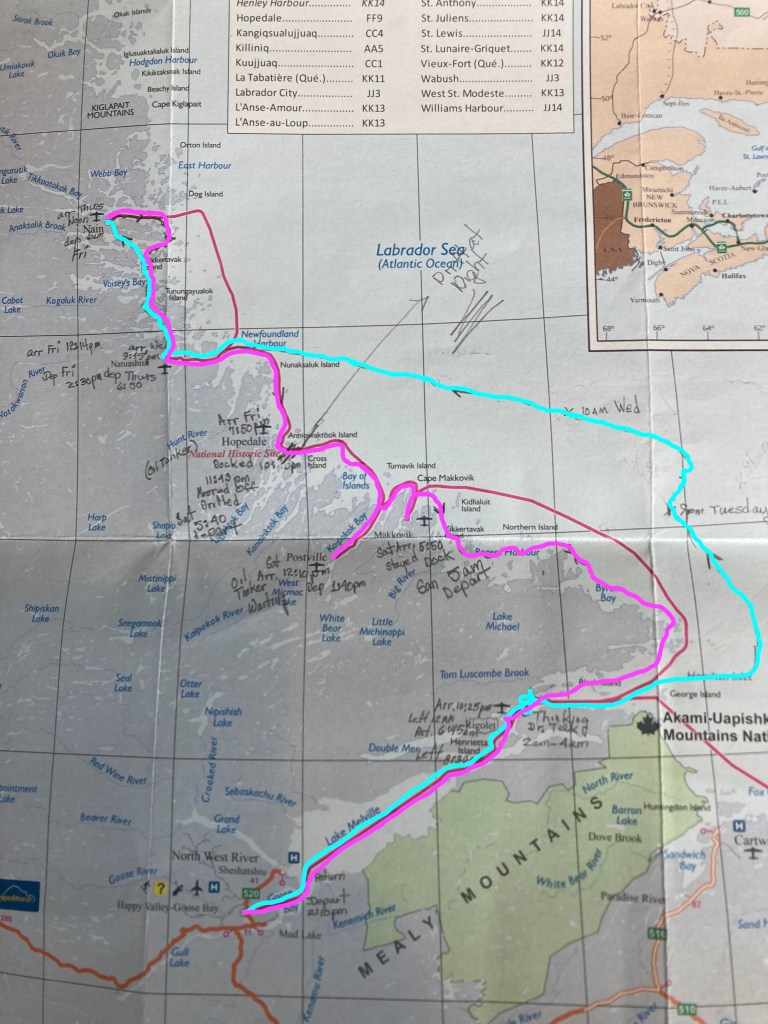
Natuashish, Hopedale, Postville, Makkovik, Rigolet

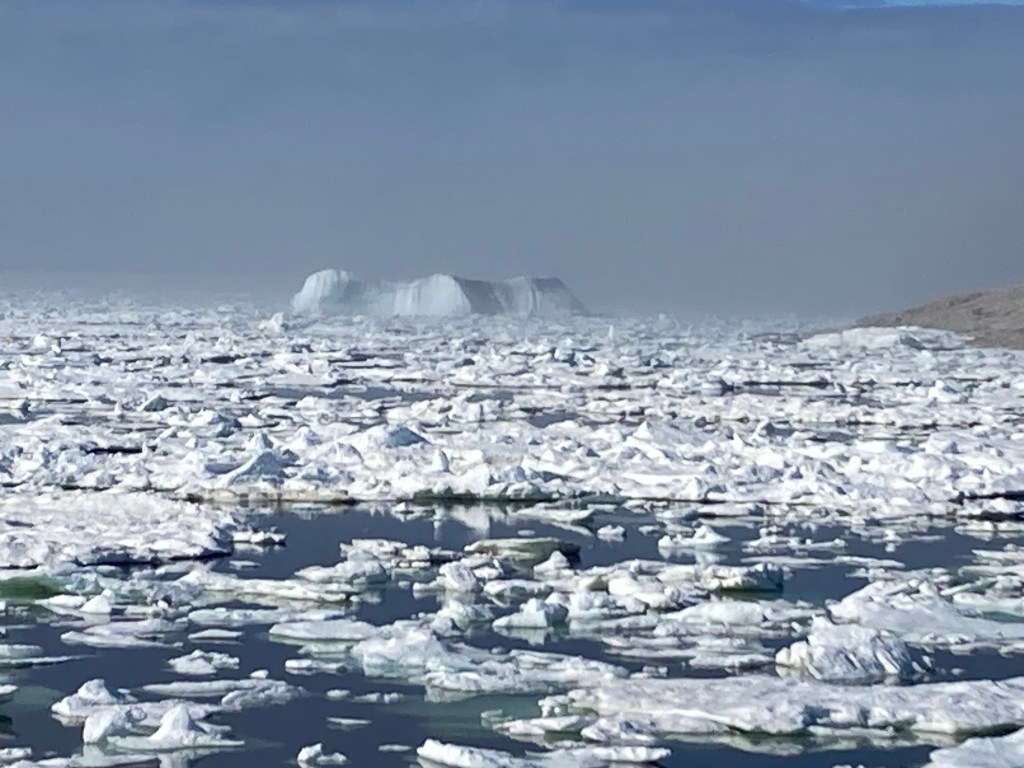
The blue line is the trip north, staying outside the worst of the ice pack and skipping three ports. Still plenty of ice and required the icebreaker the whole way.

The pink is the trip back, hugging the coast and getting into all five ports. And still had the icebreaker all the way back to Lake Melville.

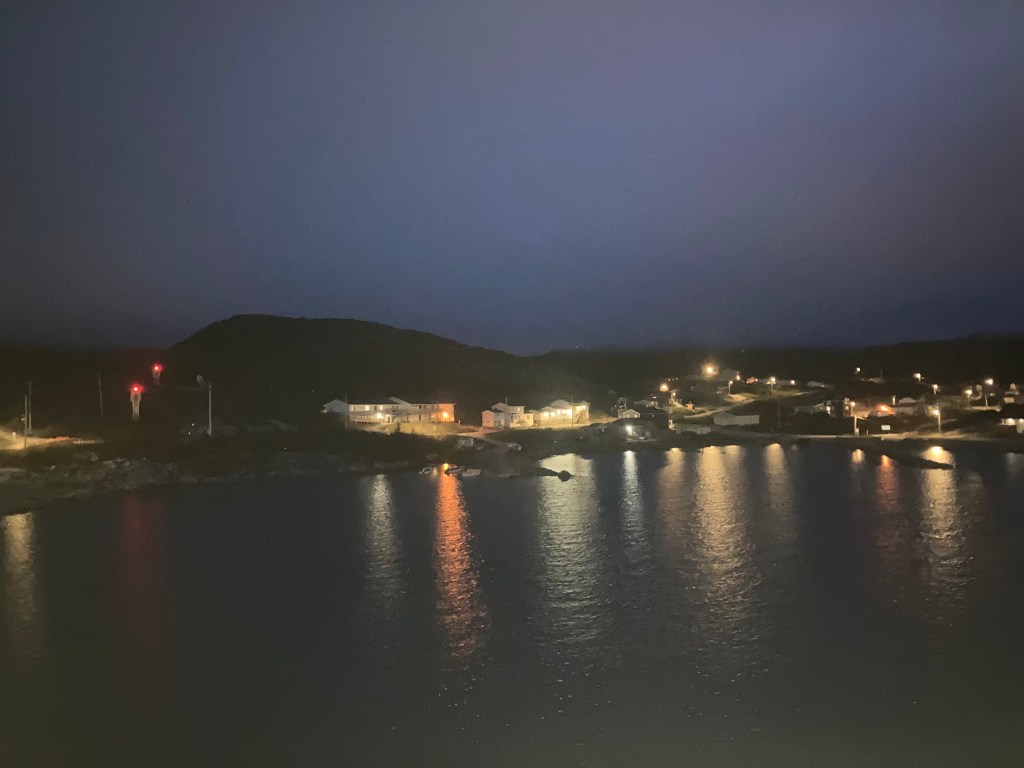
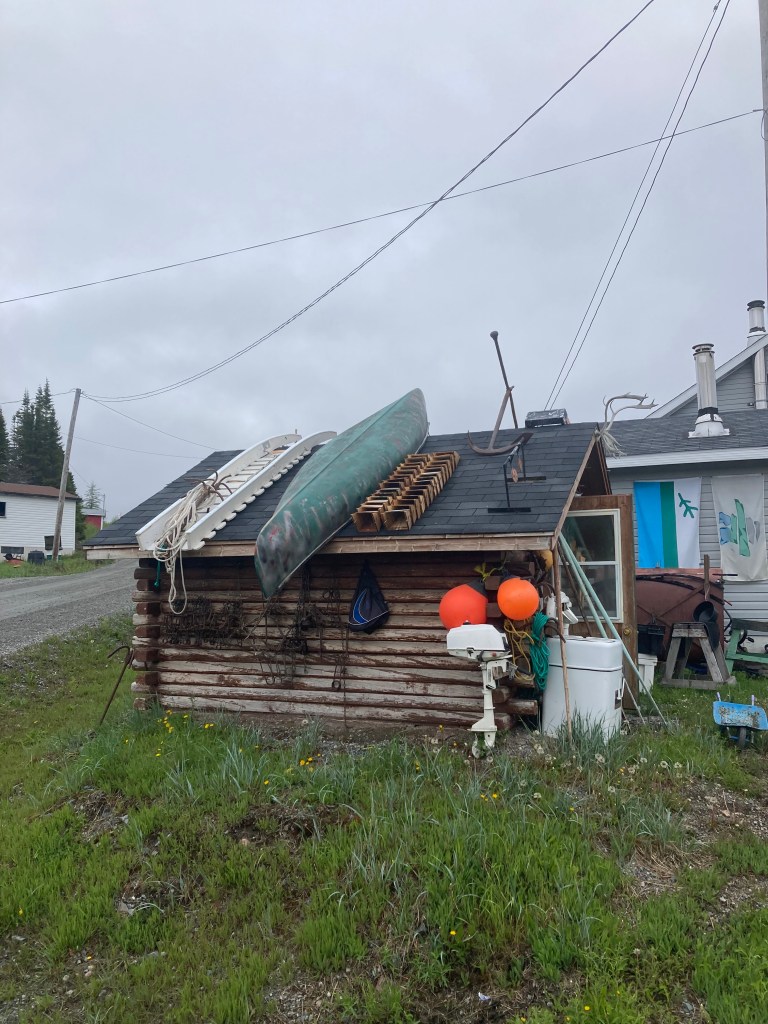
We stopped again in Natuashish, population 856, the only Innu community on the itinerary. Then on to Hopedale, population 596. Next was Postville, with 177. Finally Makkovic, with 365. It was high school graduation in Makkovic. Three graduates. The whole town turned out. A few came on board looking for potato chips with which to celebrate. Apparently they’ve been out of chips for months. Very happy to have the ferry running again. Unfortunately there were not nearly enough chips to meet demand.

All of the Inuit communities were extremely welcoming and apparently happy to have fresh faces to talk with after a long winter. So interesting to hear of school life, fishing, and family life in these small, remote, northern communities.

From Makkovic, it was back to Rigolet, saying goodbye to the icebreaker on entering Lake Melville. Seven days of ice. From Rigolet we sailed overnight on open water back to Goose Bay. About three days delayed, but very pleased with the Journey.
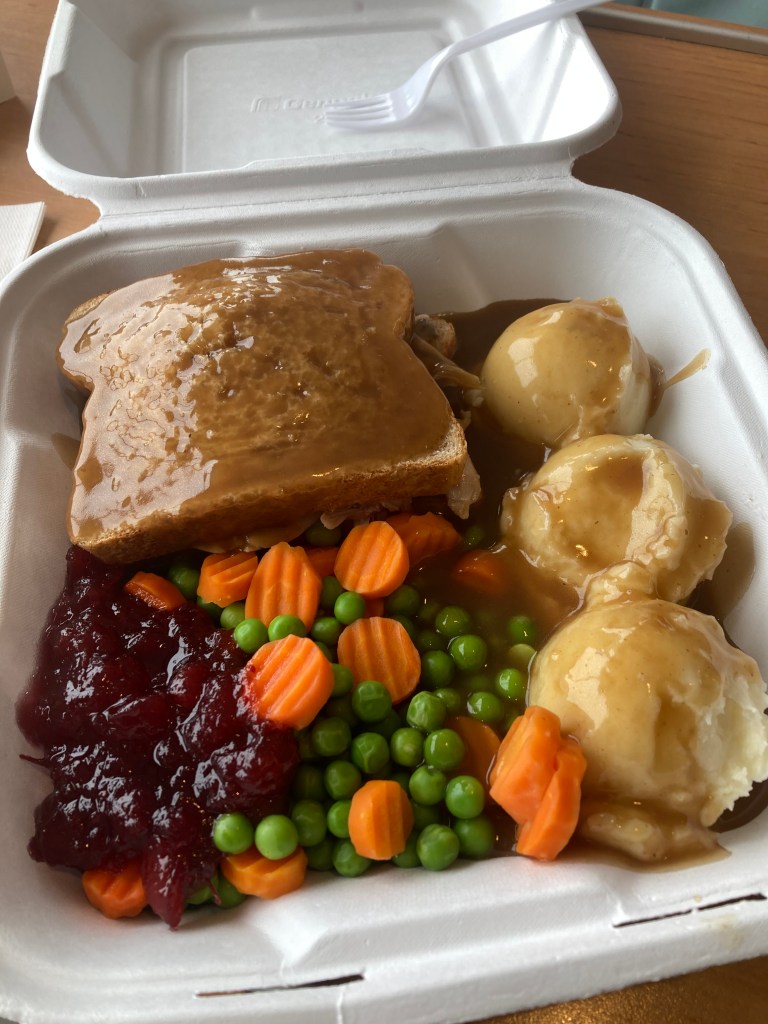
While we may have run out of chips, meals on the ferry did not lack for volume. My turkey sandwich. A slice of bread. And gravy. And another slice of bread. Three scoops of mashed potatoes. Carrots, peas, and cranberry sauce. And another ladle of gravy.
There were fifteen of us that made the round trip. A couple from Germany on a five year world tour in their very impressive German RV. They had already driven South America and a portion of Central America. Got sidetracked by COVID, and now had their RV shipped to North America and are continuing their trip. We had another German couple, two couples from Prince Edward Island, two couples from Ontario, a women from Maryland, and a retired member of the US Navy. And me. The variety made for great conversations as we milled from group to group and watched the ice go by, or compared notes from shore excursions. There is definitely something to be said for slow travel. Though it certainly doesn’t come naturally to me – I’m learning.
Happy Valley-Goose Bay

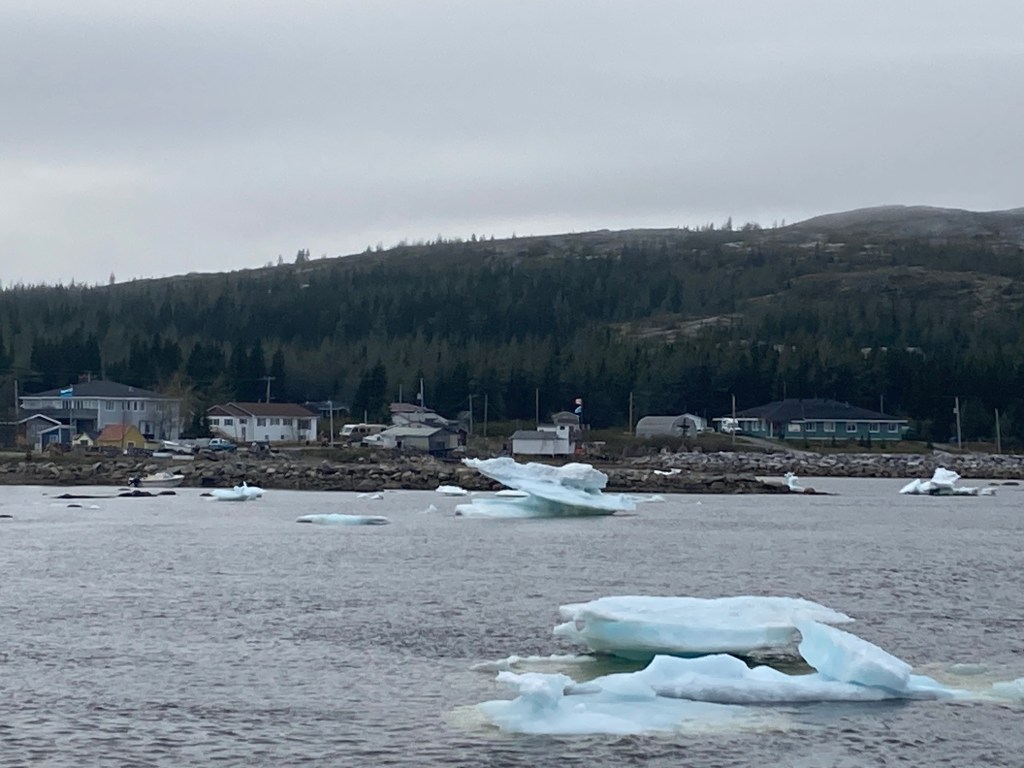
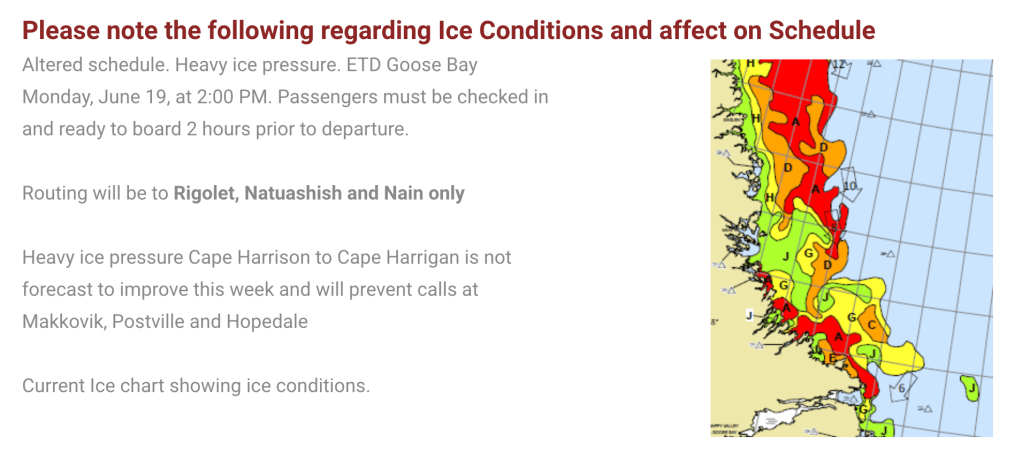
Today I am in Happy Valley-Goose Bay, Labrador. Waiting for the ferry north to Nain. I booked in June with the hope of seeing icebergs. Turns out there is so much ice that the ferry can’t get into or, in yesterday’s case, out of some ports. So my departure has been pushed out a day and three ports have been taken off the itinerary. But I still get to Nain, which is the far northern point of the ferry run. Nain was founded by Moravian missionaries in 1771.

For those not familiar with ice charts, the red means the water surface is 90% to 100% ice. That doesn’t mean icebergs, it can just be somewhat thin new ice, or packed in flow ice. The letters go to a key that makes that more clear. Bottom line, I should see plenty of ice. Headed out tomorrow, back on Friday, I think.

The docent at the Labrador Interpretation Center in North West River did tell me that I would likely see lots of marine life on the trip to Nain. She also had me start my tour of the center at an art installation. The quote above is from the introduction to the exhibit. I have been struggling with “home” and found the works timely.

And the ferry trip turns out to explore others’ homes. Rigolet is the southern most officially recognized Inuit community in the world. Inuit are traditional inhabitants of high latitude terrain. The next stop, Natuashish is an Innu community. The Innu are distinct but closely related to Eastern Cree, so they are traditionally arboreal and at the northern edge of their territory. Nain is the oldest permanent Inuit settlement. Spread throughout the southern range of this area are the Metis, descendants of European men and Inuit women, now called Nunatukavut. These three represent the three groups of indigenous people recognized by the Canadian government. Innu and Inuit have two different languages and many place names and business names are in one or the other language.

But I’ve gotten ahead of myself. I last posted from St. John’s and I’m about 1,000 miles from there now.

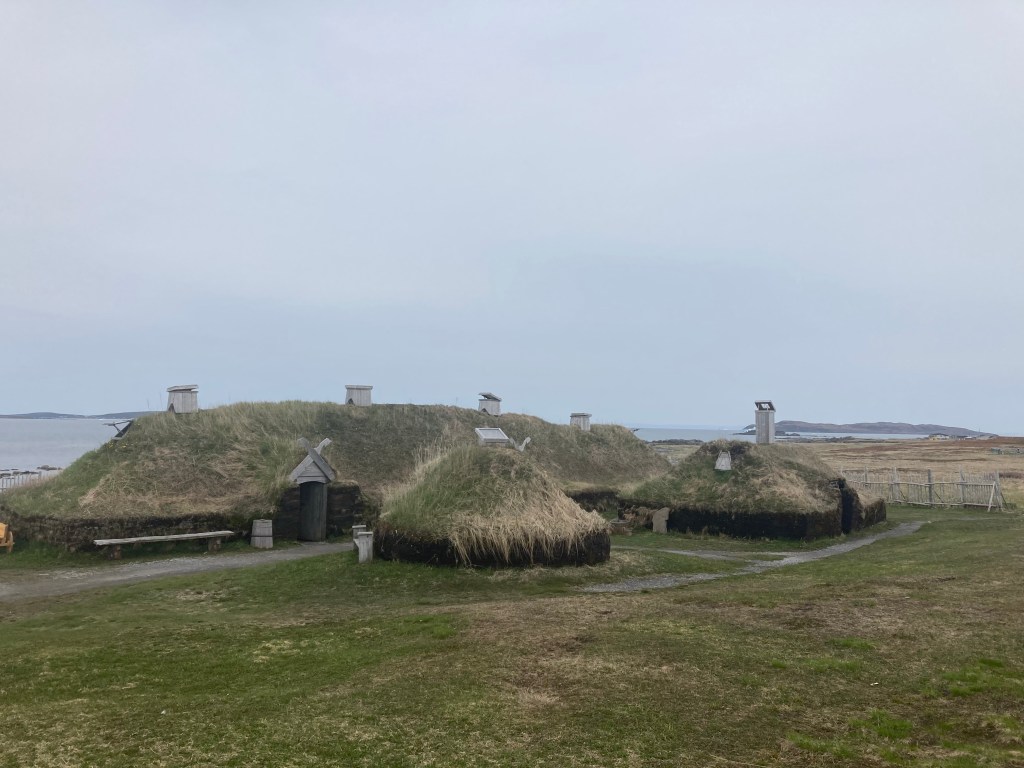
Above is a recreation of the only verified Norse presence in North America. This sits next to the actual archeological site. There are very well informed presenters in period costume on site. It is not a life I would want to lead. The site dates back to about the year 1000 CE.

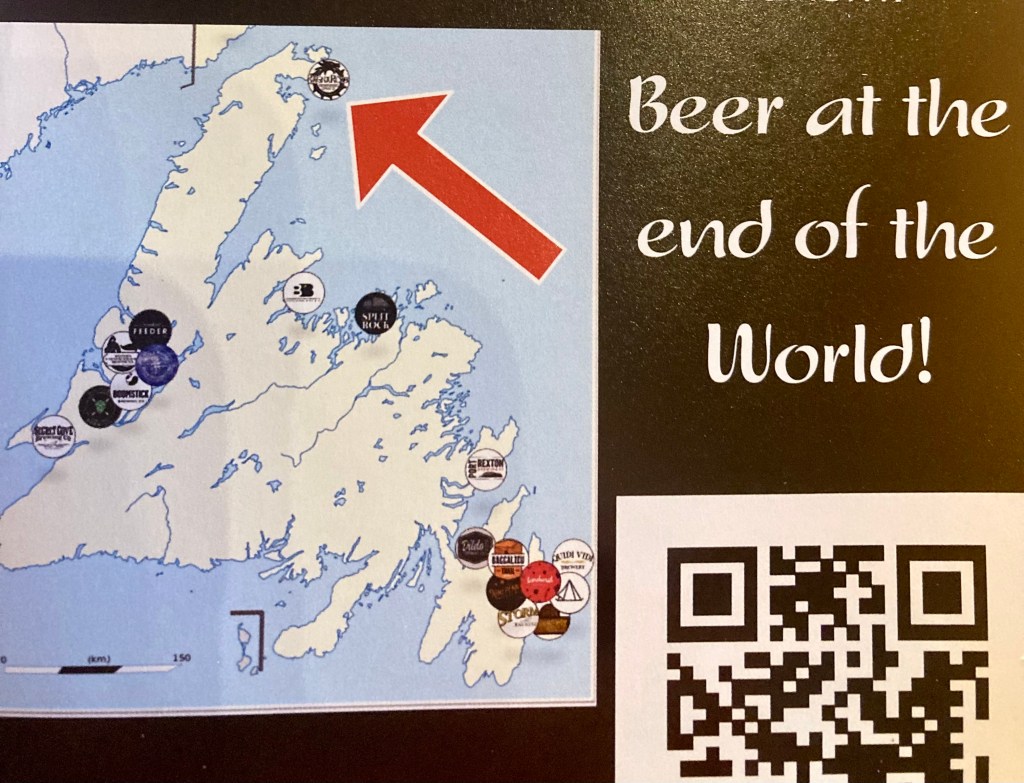
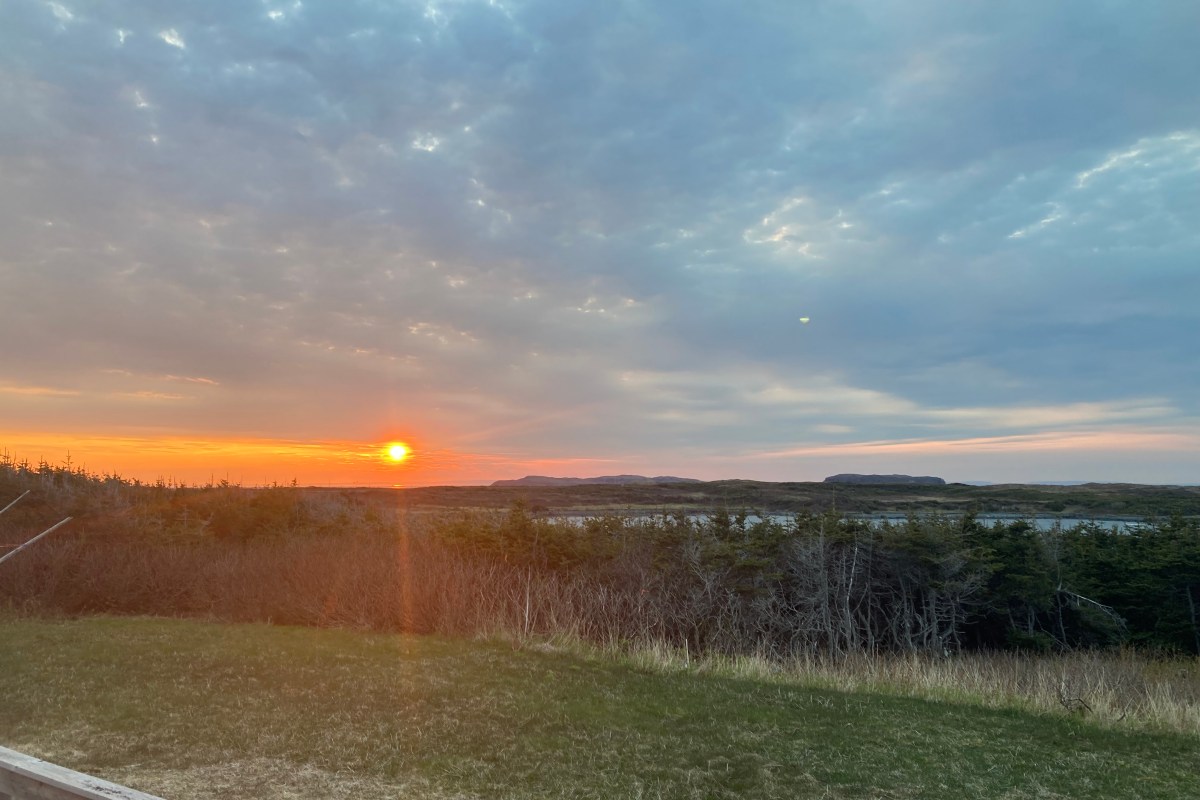
The picture at the top of the page is taken from the back porch of my hotel room, across the street from l’Anse aux Meadows. And just down the road in St. Anthony, is RagnaRock Brewery. I spent a couple of hours just chatting with one of the owners. Well, and tasting beer.

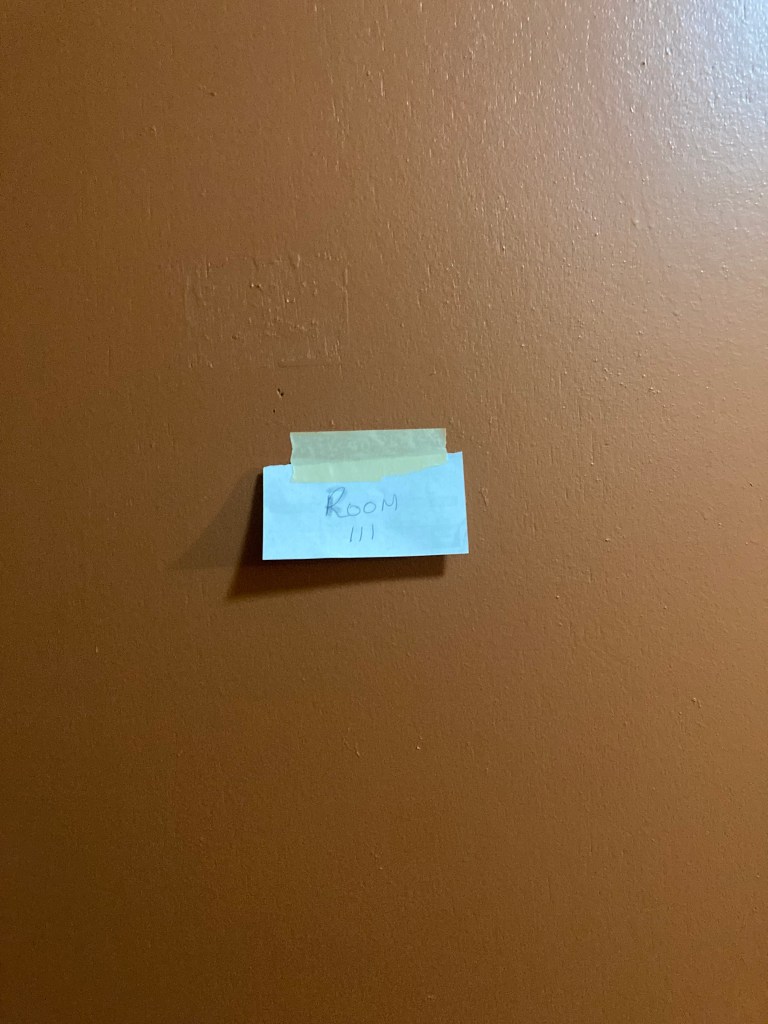
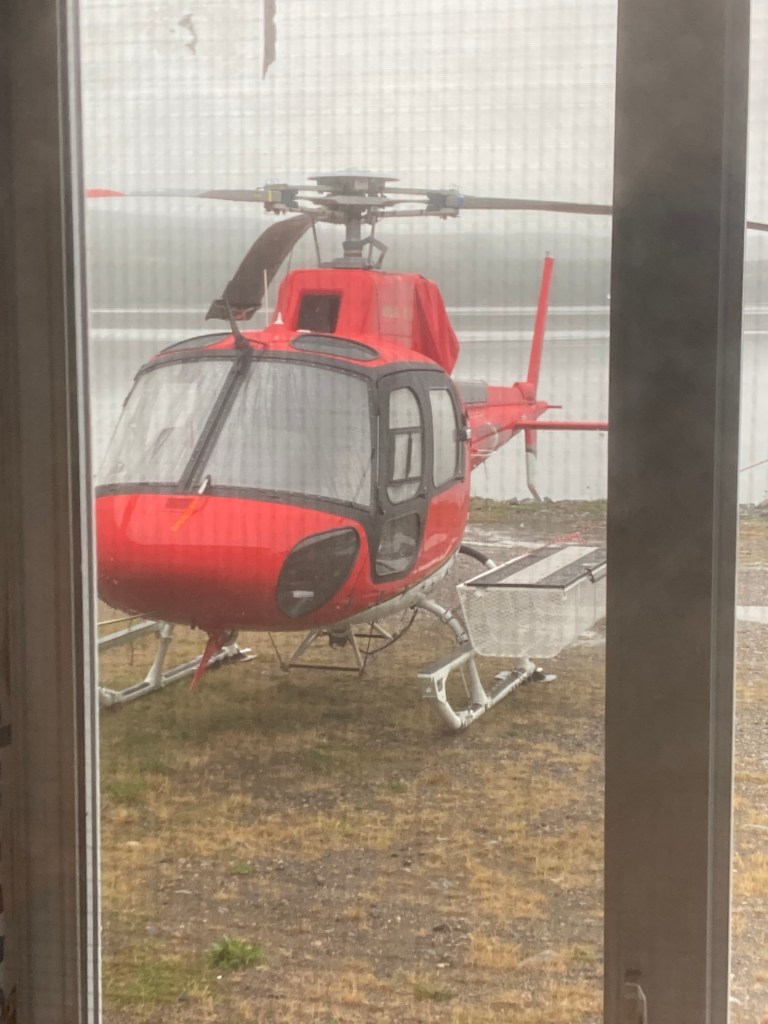
I took the ferry (another ferry) from St. Barbe, Newfoundland, to Blanc Sablon, Quebec, then a few hours up 510 to Port Hope Simpson, Labrador. The only option between Blanc Sablon and Happy Valley-Goose Bay. I can’t confirm, but it seems possible that room numbers are randomly assigned each morning? But they do have a helicopter.

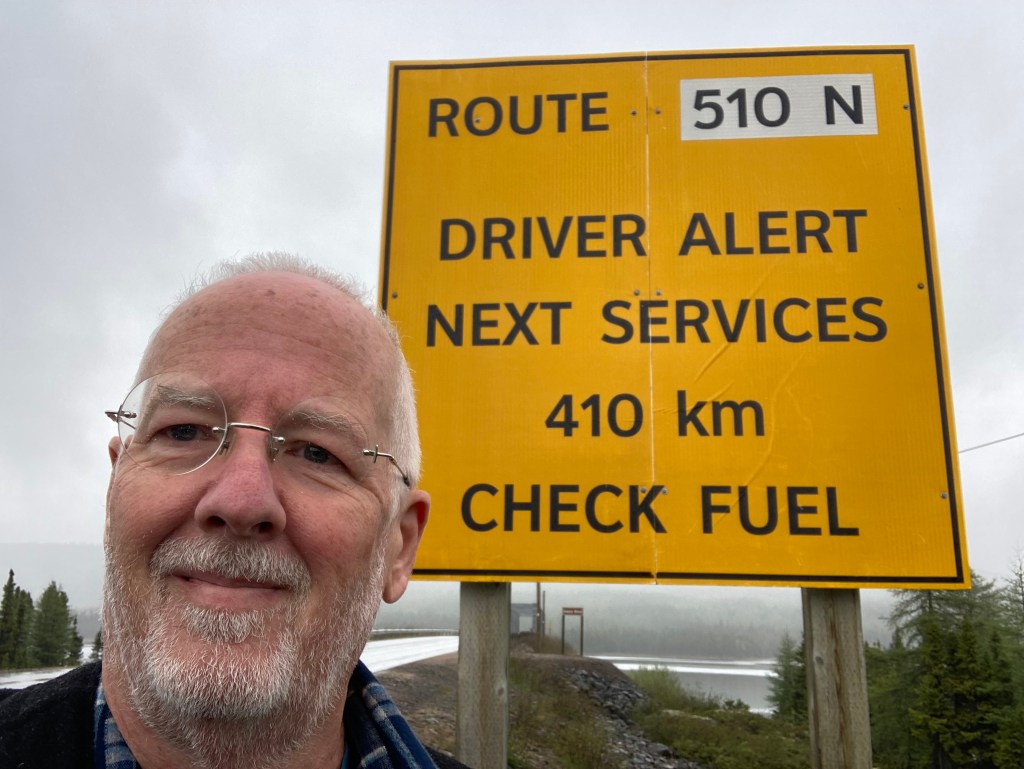
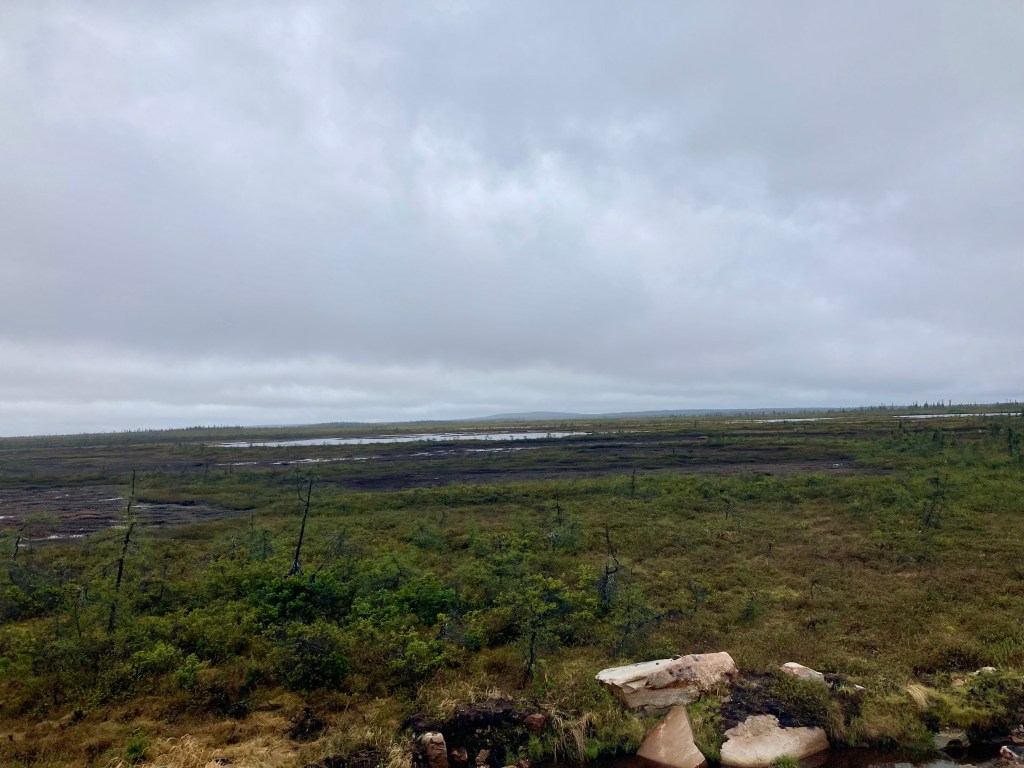
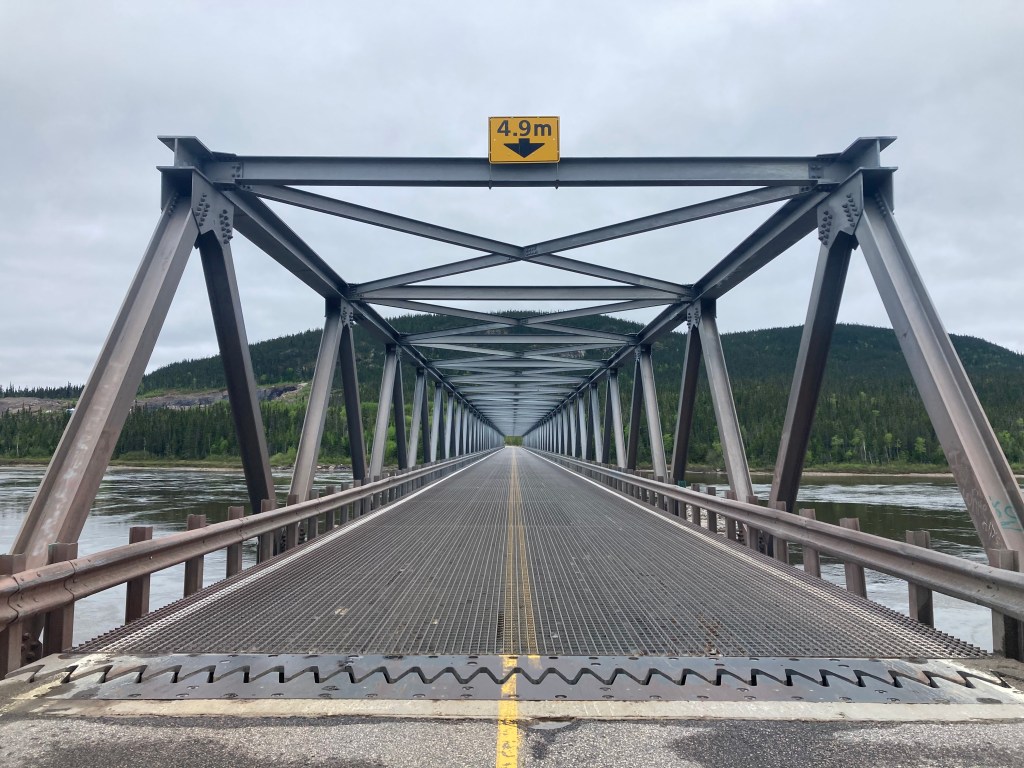
From Port Hope Simpson it is 410 km to the next town. Literally. I didn’t pass a single house in that distance. I saw 22 +/-3 vehicles and one bear. Below is the bridge at the end of 510, coming into Happy Valley-Goose Bay.

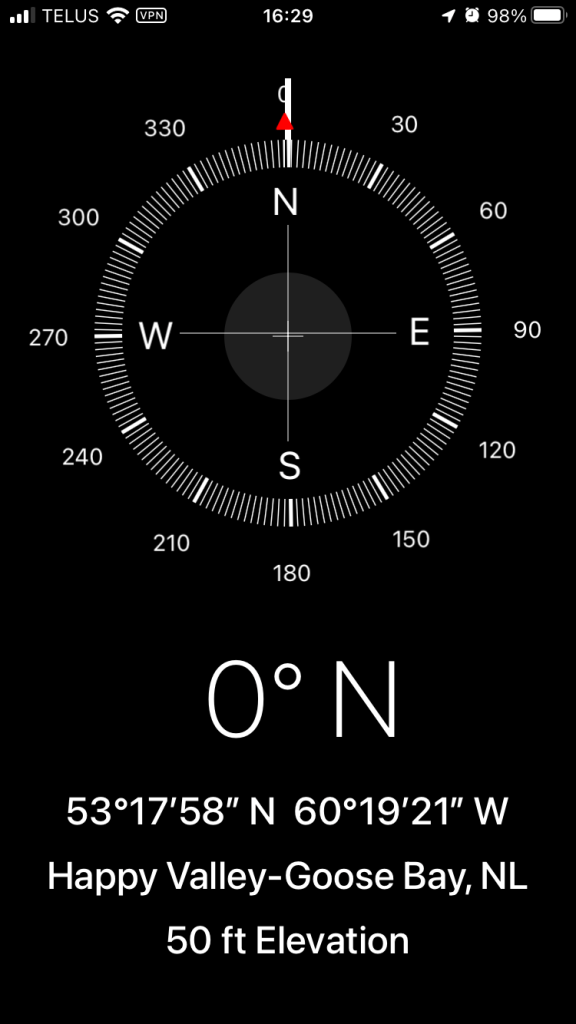
Which gets me caught up to the present. At 53+ Degrees North, headed north.

To add to the consideration of “Home”, this came up on a random shuffle of my iTunes. Charles Bukowski as interpreted by Tom Waits.