I bungled my planning for Glasgow. After the ferry and the drive from Islay, the road closures in Glasgow, and getting my car returned, I didn’t check in until 4 PM. And my train to York was scheduled for 6:48 the next morning. That didn’t leave much time for poor Glasgow.
I didn’t mention it in the Edinburgh post because it didn’t seem significant. Just down the street from my hotel there was some sort of filming going on. The streets of Edinburgh are already quite congested and adding all the paraphernalia of a film set wasn’t helpful. But, it is what it is. Then I got to Glasgow and instead of being on foot, I was in a car. A car with a manual transmission, hilly streets, and the gearshift on my left. And both sides of the street in front of my hotel consumed by Warner Bros. trucks and security guards. No place to stop to drop luggage or register. I ignored them, stopped, and dropped my suitcase anyway, getting yelled at the whole time. I later learned that they not only commandeered the street, but they start work, loudly, at 5 AM.
The hotel turned out to be quite nice. It is apparently a repurposed building with some beautiful stained glass in the main stairwell. This one happens to be of the Glasgow coat of arms, featuring St. Mungo.
I got upgraded to a suite with amazing 15 foot ceilings. I wish I hadn’t mangled my schedule because I didn’t get to enjoy the room.
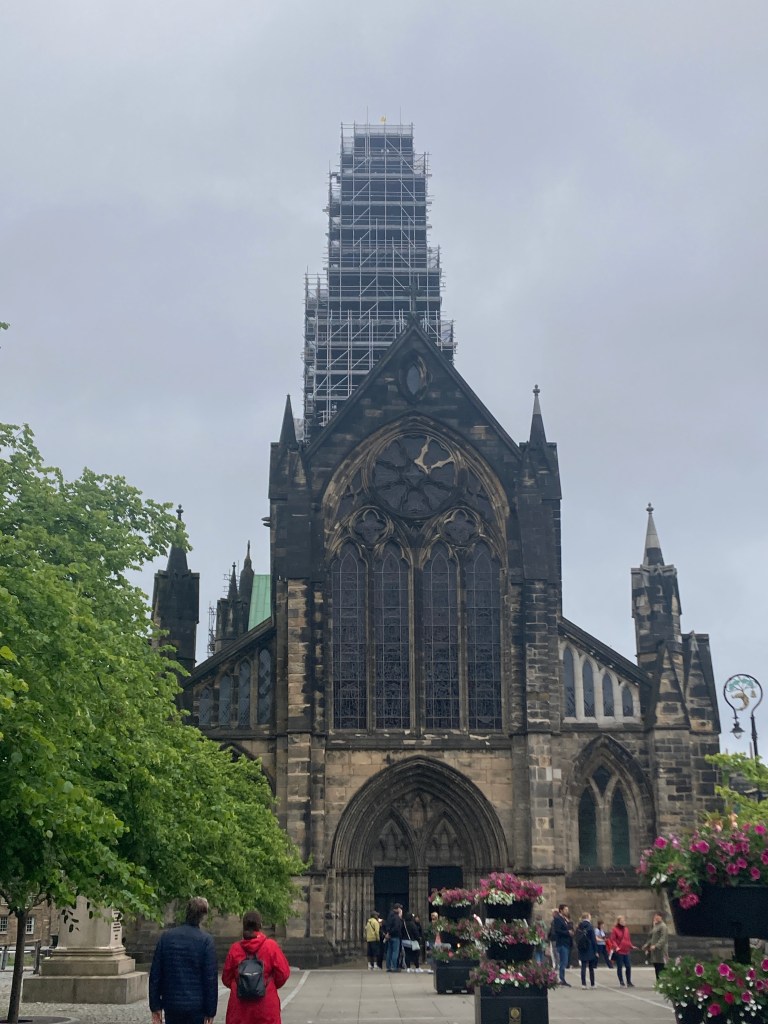
I arrived too late to get a look inside. This is the Glasgow Cathedral. Construction started in 1136 and was completed about 350 years later.
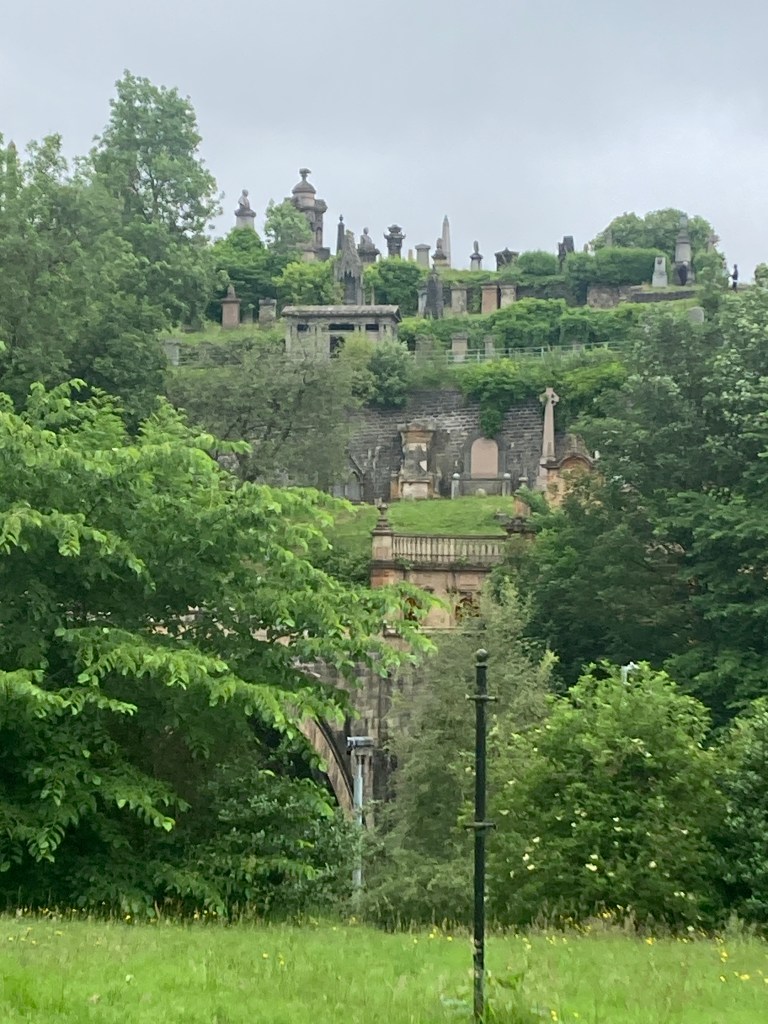
The major draw for me was the necropolis behind the church, a part of which can be seen in the photo at the top of the page and at right. I was too late for that as well.
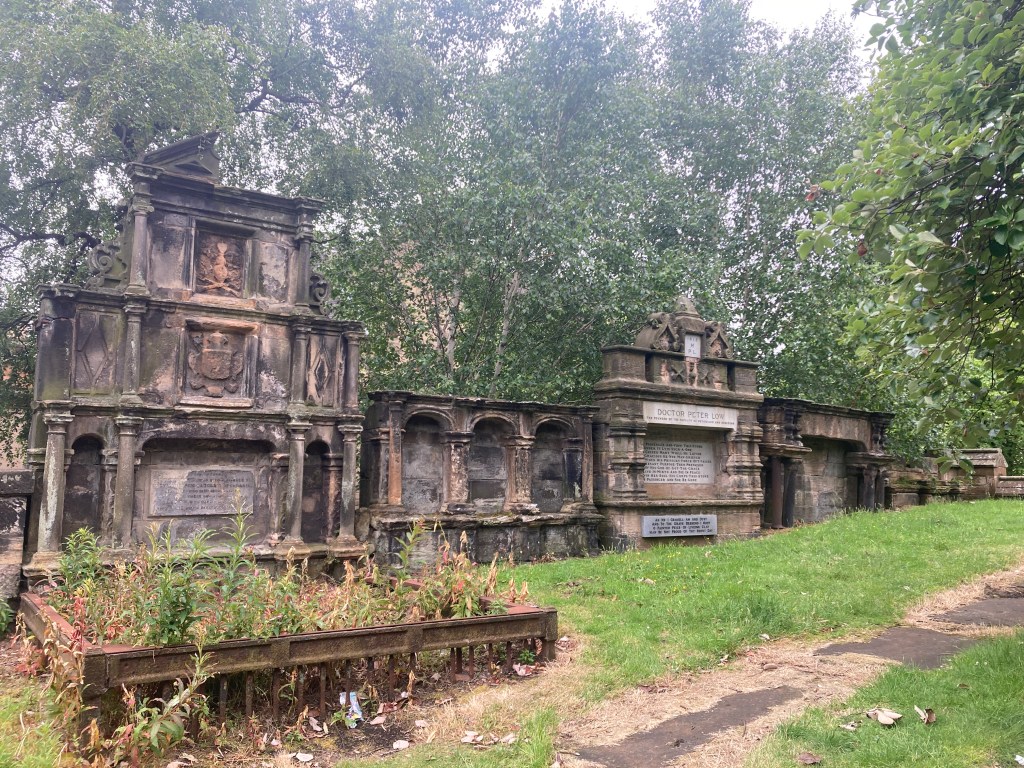
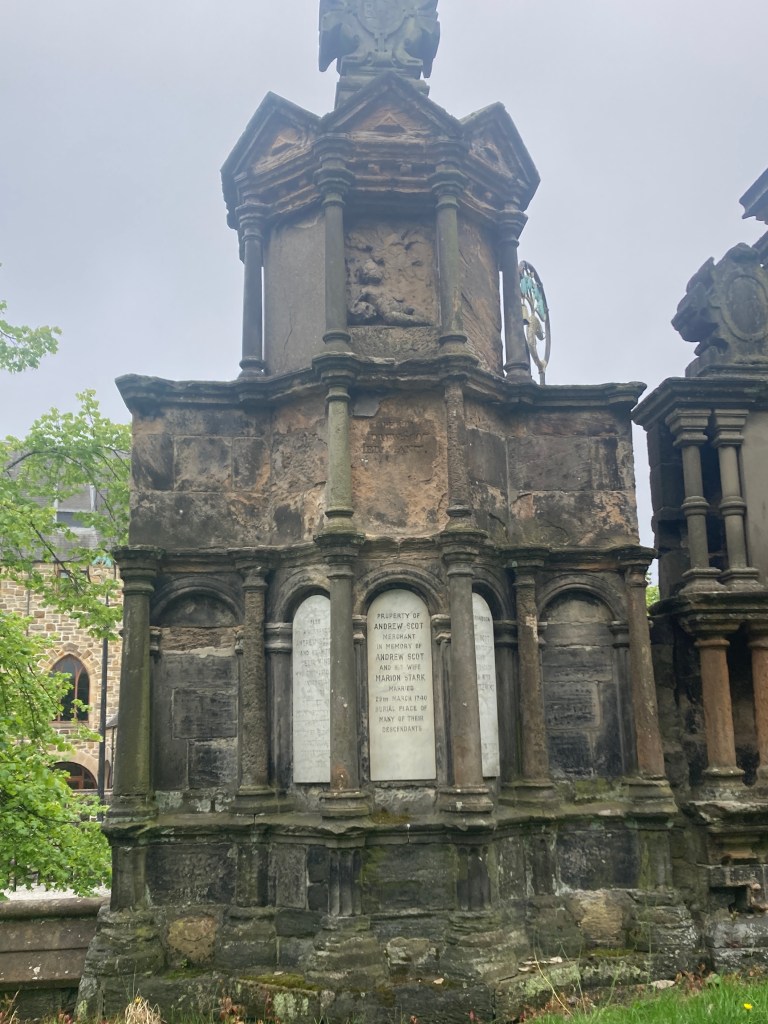
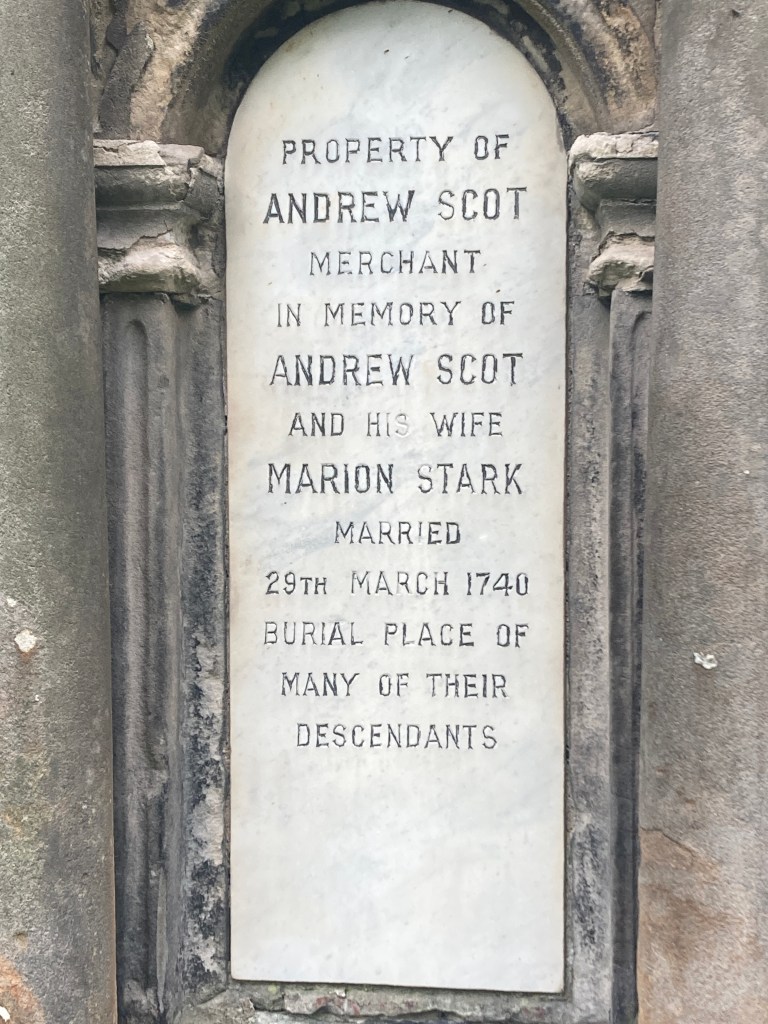
I was able to amble about in the cemetery abutting the cathedral. I had to smile, and acknowledge that I was in the land of Adam Smith, when the gravestone starts with “Property of…”
Islay (EYE-la) was wonderful! At the top of the page is the view from my room at the Port Askaig Hotel. Bottom line up front? If you are a scotch drinker, then absolutely go! If you aren’t, you may find other parts of Scotland just as beautiful, easier to get to, and a little less expensive.
I picked up a car in Edinburgh and drove cross country to Islay. The car was quite small, which turned out to be the right choice. Driving on the left hand side, with the stick on the left, on narrow roads took some getting used to. Well I didn’t get used to it – I just was eventually able to loosen my grip on the wheel. The 150 mile trip to the Kennacraig ferry terminal took four hours.
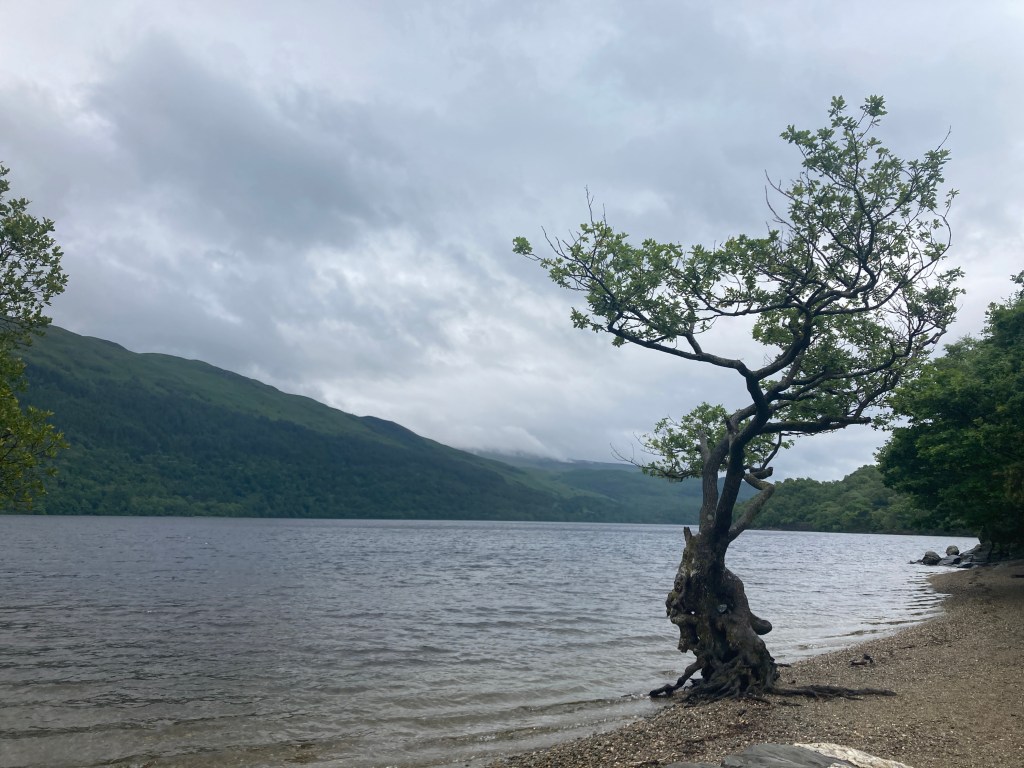
The route took me passed Loch Lomond and through the hills. I don’t have pictures that are able to convey the scenery. That is especially true for the section between Loch Lomond and Inverary. It had just rained, and I now have a new conception of the word “freshet”. The rain water cascading down the mountains in numerous freshets, against a background of amazingly varied shades of green was astounding.
Loch LomondSmall, manual, driver on rightApproaching Inverary
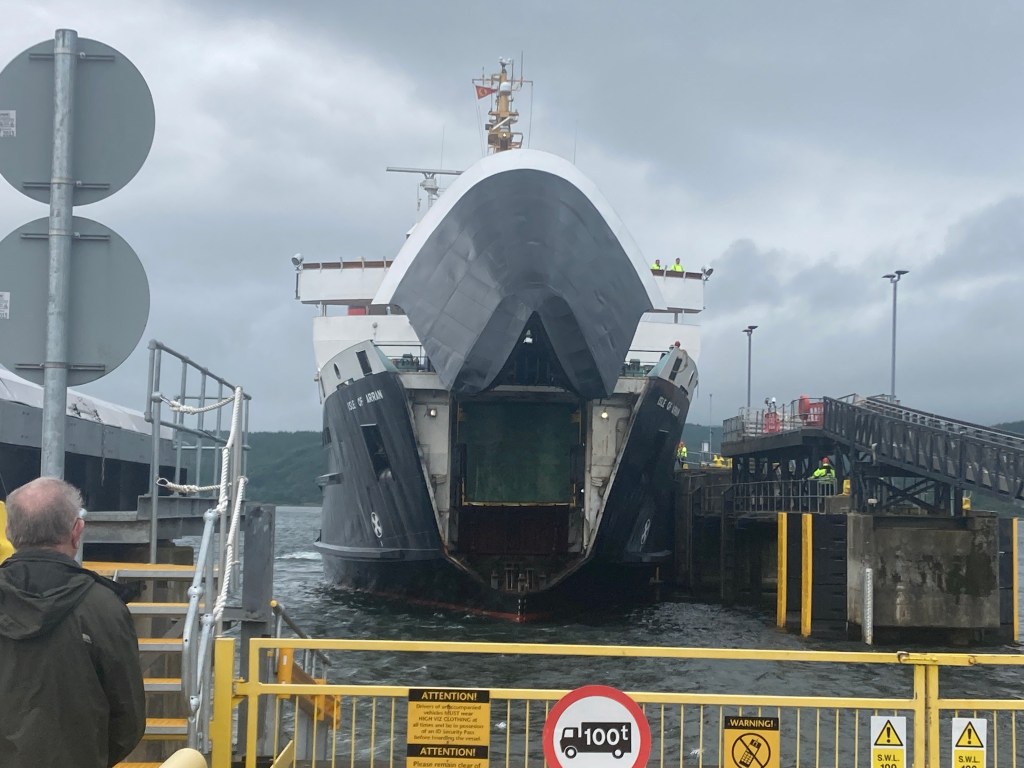
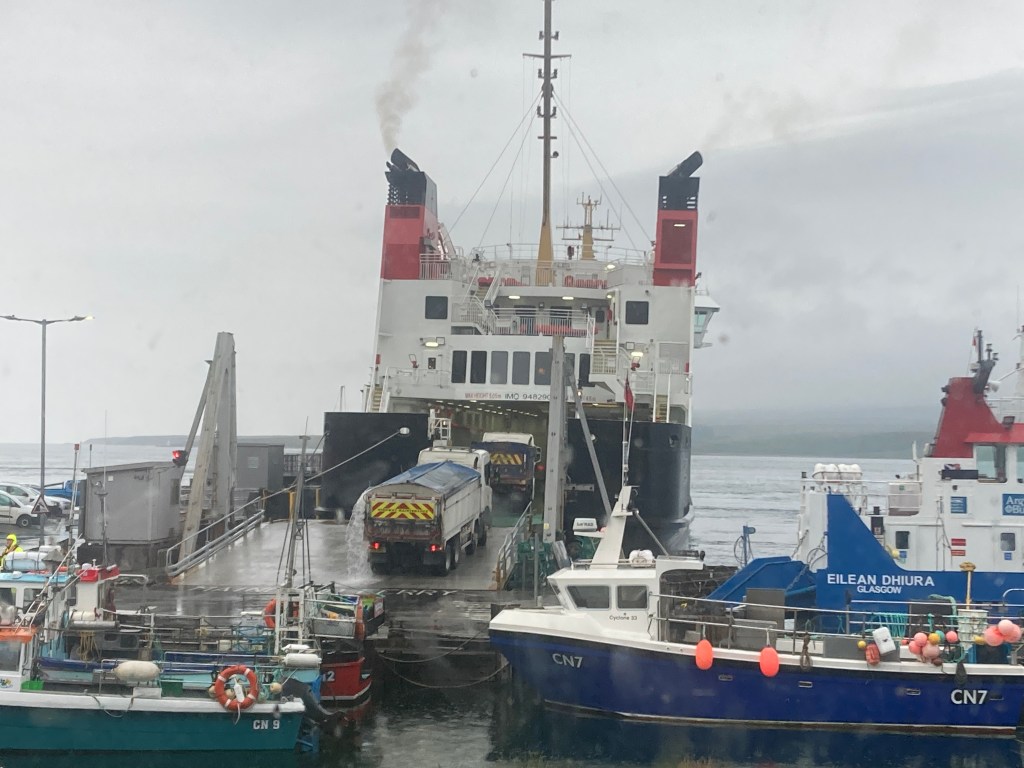
From Kennacraig it is a two hour ferry ride to Islay.
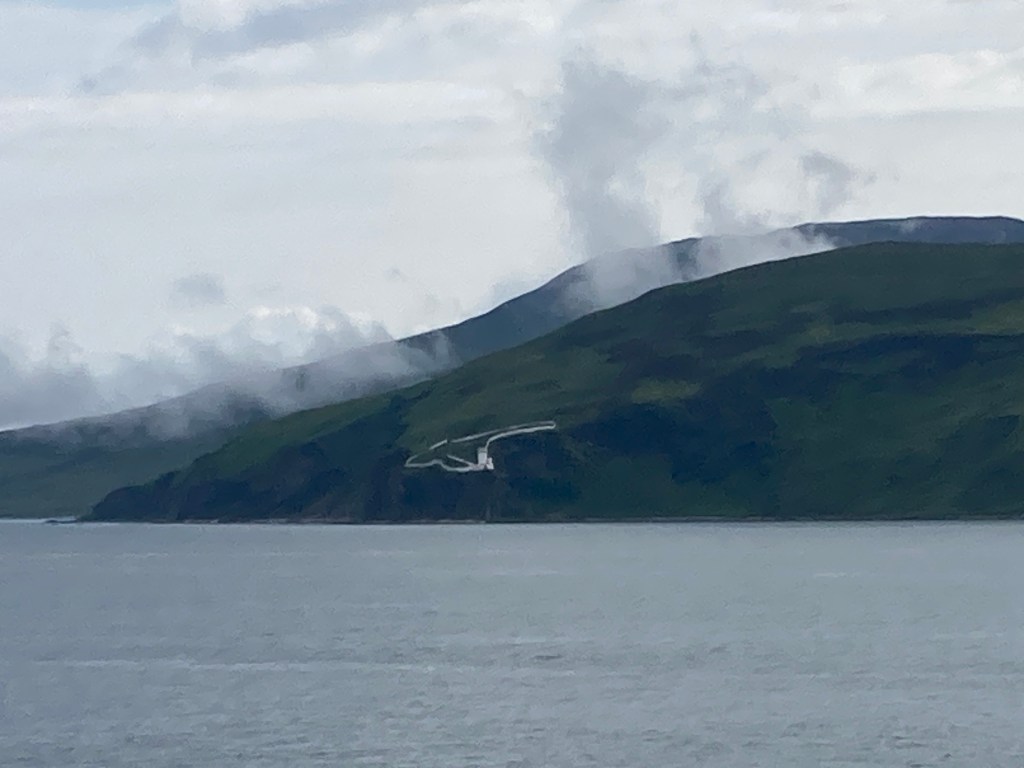
Islay from aboard the Caledonia-MacBrayne (CalMac) ferry
I only toured two distilleries and that was pushing my luck. Scotland has zero tolerance for driving with alcohol on board. Zero. If I go back, I’ll arrange for a taxi, tour, or something. I highly recommend planning better than I did.
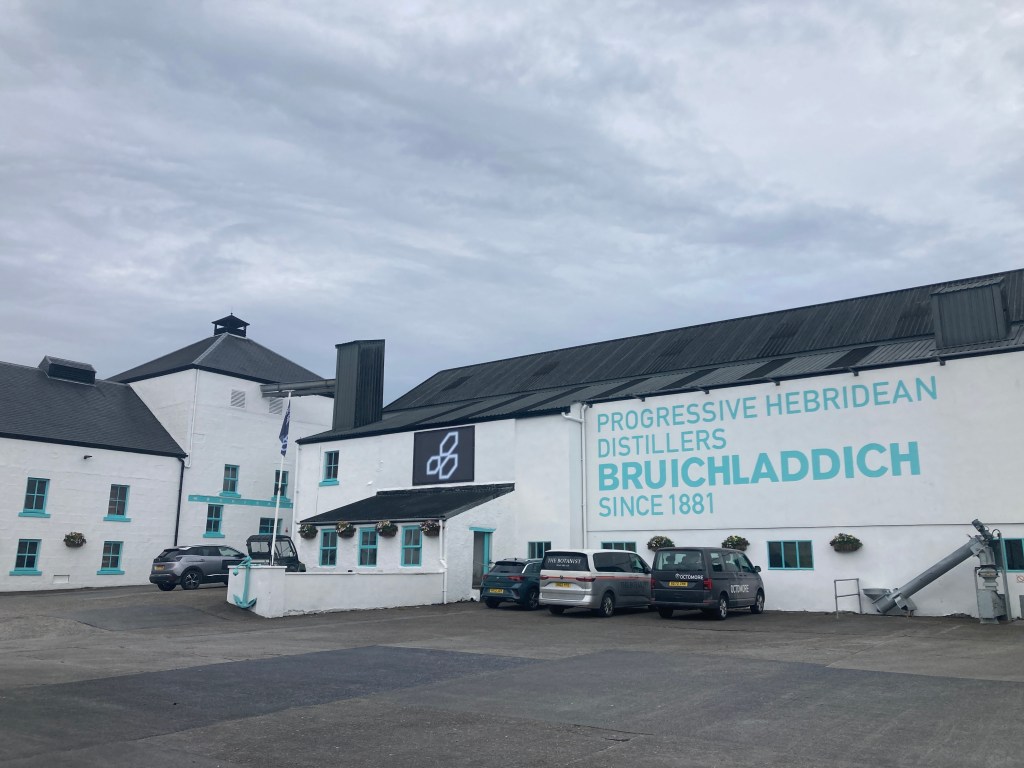
While I may not have planned well, I was lucky. I picked two distilleries with very different approaches and processes; Bruichladdich (BREWK-laddie) and Caol Ila (Cull-EELA, sorta rhymes with tequila).
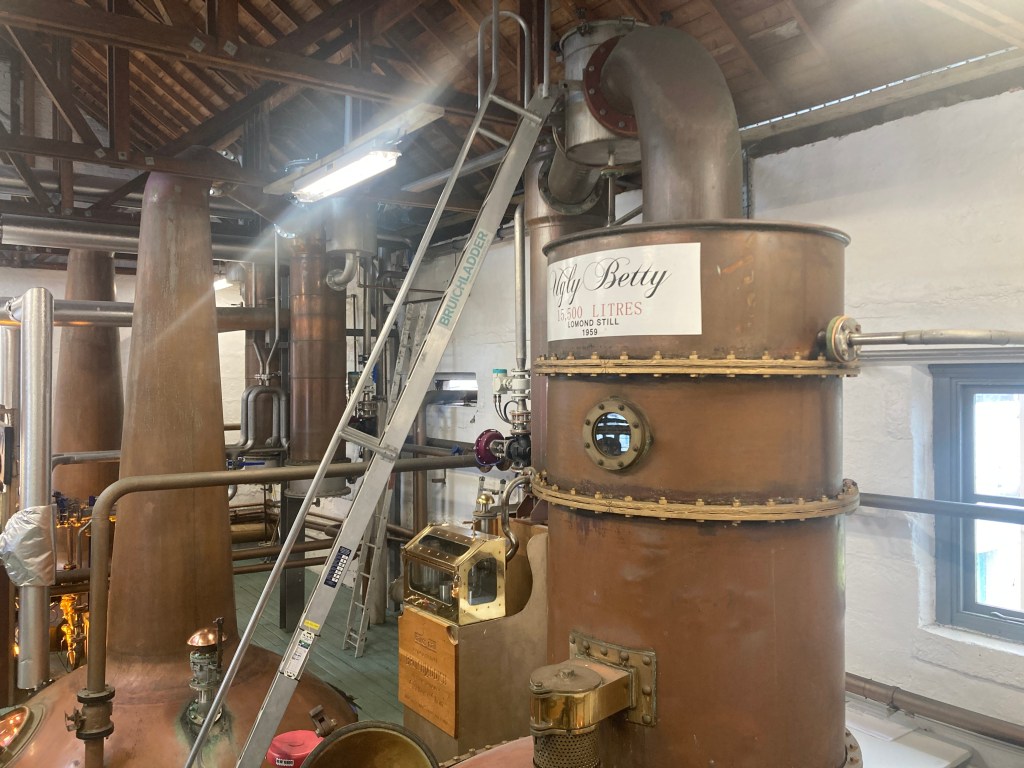
Bruichladdich was founded in 1881 but really started its current product philosophy with the sale to new owners in 2001. The plant retains much of the equipment and processes from 1881 and is vocally committed to an artisanal approach to the product. I didn’t take many pictures during the tour as I was so captivated by the distillery and the guide. The picture above on the right is the still room. On the left are the stills for Bruichladdich, Port Charlotte, and Octomore Scotch Whisky. “Ugly Betty” on the right is where all of The Botanist Gin is produced. Bruichladdich was again sold in 2012 to its current owners, family owned Rémy Cointreau.
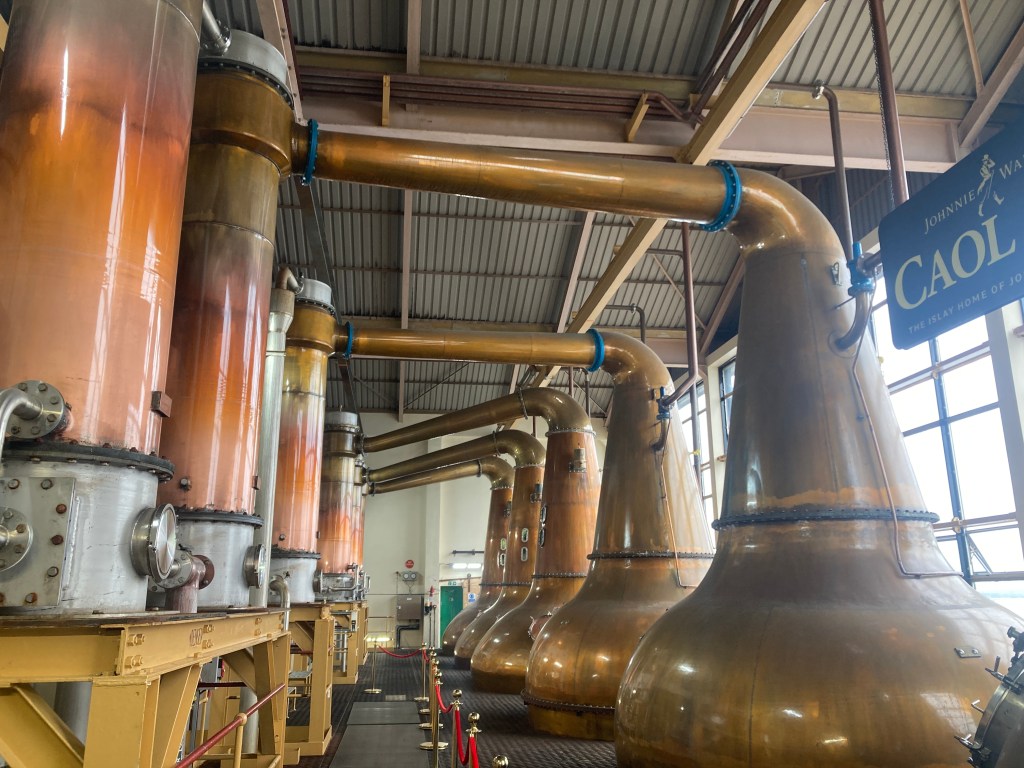
Caol Ila is a very different experience. Owned by Diageo, the Caol Ila tour is clearly one component of a coordinated marketing approach by Diageo, who also owns Johnnie Walker, Talisker, Lagavulin, Singleton, and over two hundred other alcohol brands sold in 180 countries. I’m not saying it is bad – I learned a great deal. Caol Ila started selling to Johnnie Walker in the mid-19th century and about 85% of its output goes into Johnnie Walker products. This distillery is not about old world craft, it is about modern process control. Much of the front and back end processes are no longer done on site. But the mash tun, washback, and distilling is here and it is beautiful. While I’ve had plenty of Johnie Walker, this was my first experience with Caol Ila single malt product. It is great product.
It probably shows through that I liked the Bruichladdich tour better than the Caol Ila tour. I’ll likely drink more Bruichladdich in the future, but purely for sentimental/emotional reasons conveyed in the visit. But I will be happy to drink Caol Ila (and Johnnie Walker) when it is in front of me!
My final thoughts on Islay. It is an island. Everything coming on or off comes by ship. That makes shortages of items in stores and restaurants inevitable. And what is there is expensive.
But like many islands, that separateness creates a community spirit and a self-sufficiency. While the Port Askaig Hotel is a little worn, I had the most memorable and the most pleasant evenings of my trip so far on Islay. I hope to make it back someday.
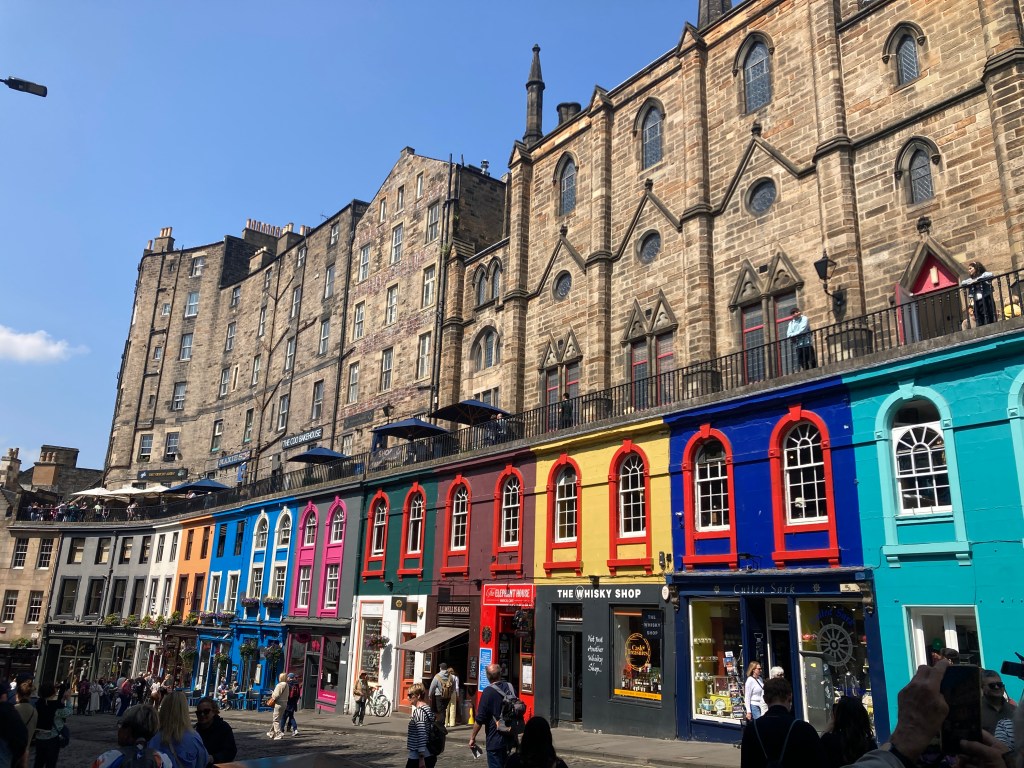
Victoria Street in Edinburgh’s Old Town. The street rises from Grassmarket up to the George IV Bridge. It is an example of the verticality of Edinburgh. A straight line is not always the easiest way to get around. Beware of “Stair” symbols on your map!
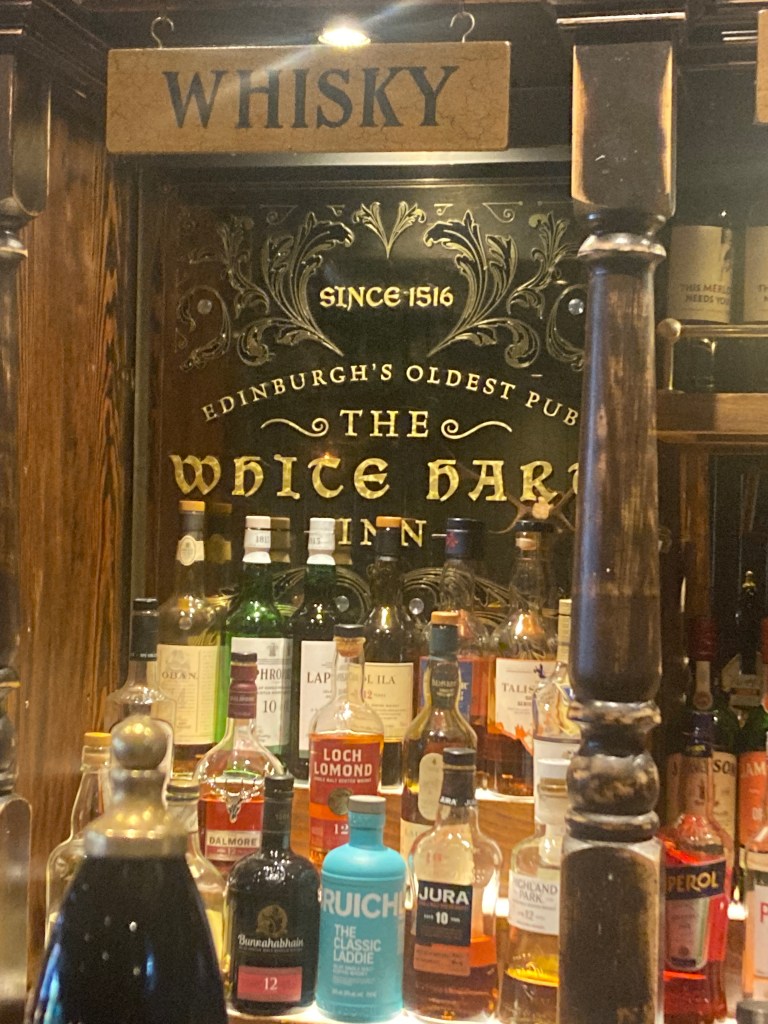
Named after King David I’s storied encounter with a White Stage while hunting, this bar’s cellar dates to 1516. Like most of the Old Town, the superstructure is much newer, in this case dating to the 1740’s.
Ironically, most of the Old Town (1860’s) is newer than the New Town (1767-1850). By the mid-19th century, the Old Town was a mess, with narrow streets and its geography restricting horizontal expansion, it had been forced to grow vertically. Over centuries, floors were repeatedly added to existing buildings, up to eight or ten stories being common and 14 stories not unknown. In 1861, the building next to Paisley Close collapsed into rubble. After the survivors were thought to have been cleared from the debris, a voice was heard saying, “Heave awa’ lads, ah’m no’ deid yet!”. The disaster instigated the widespread demolition and rebuilding of the Old Town to align and widen streets and improve sewer systems. https://www.edinburghexpert.com/blog/im-no-dead-yet-disaster-on-edinburghs-royal-mile It also seems have provided material to Monty Python.
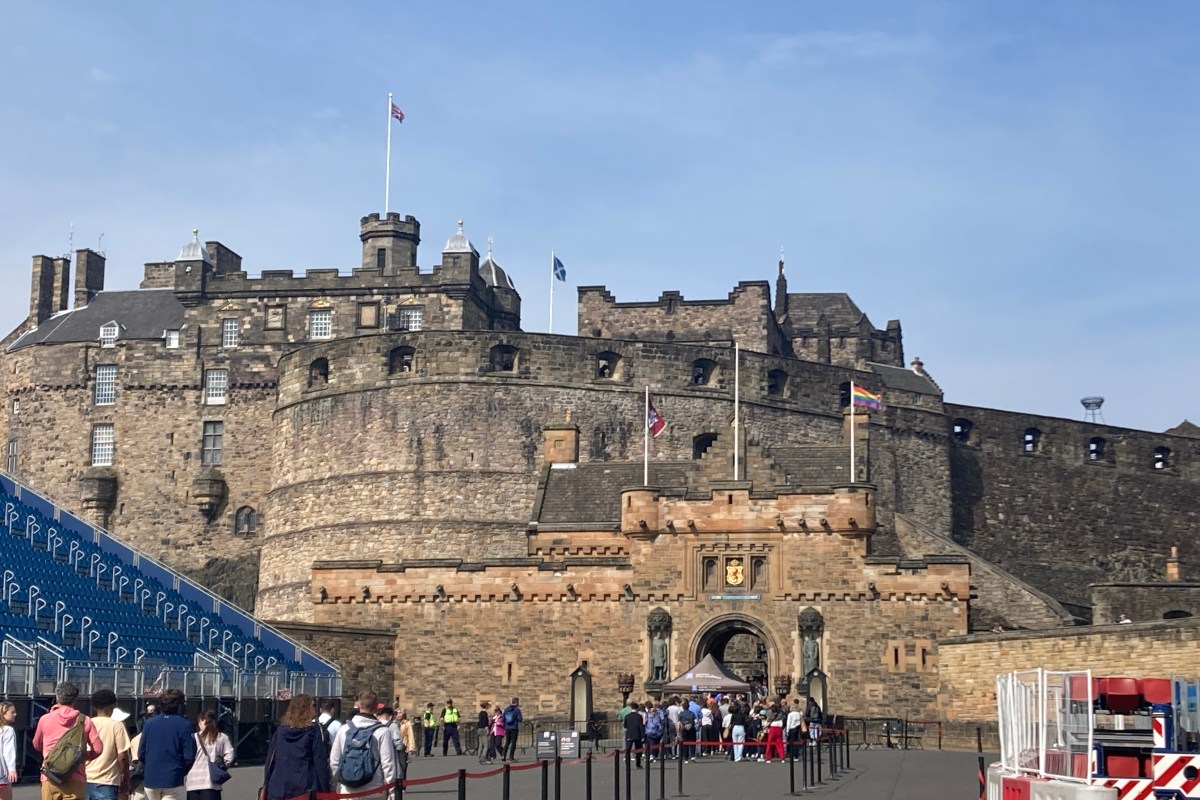
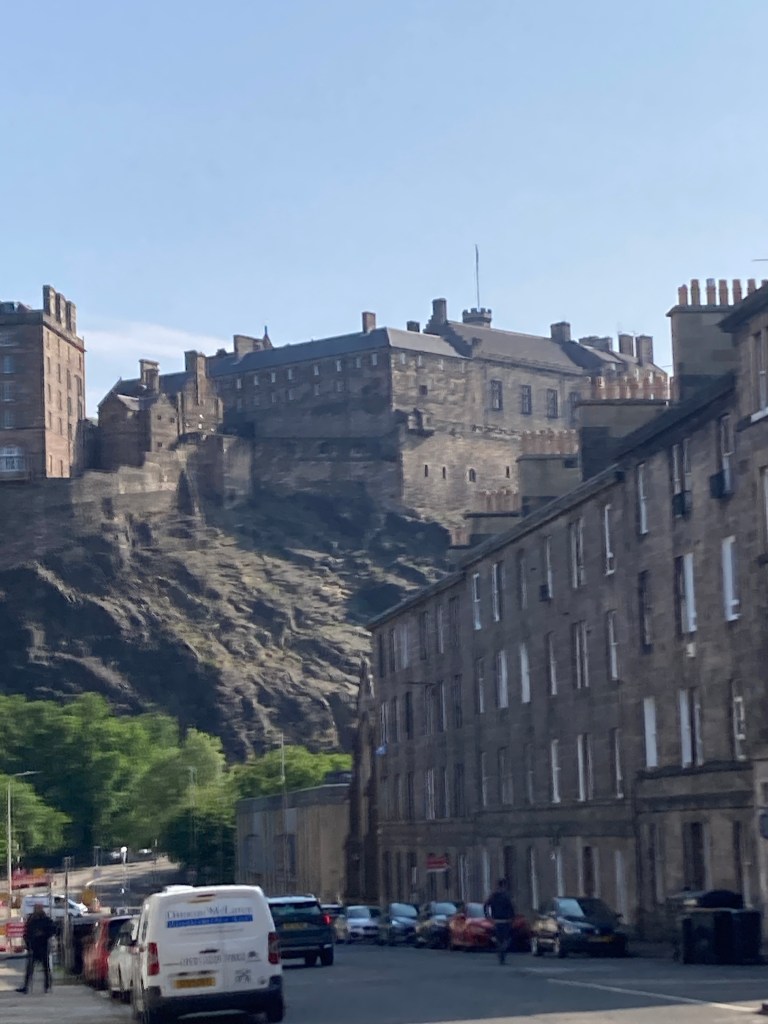
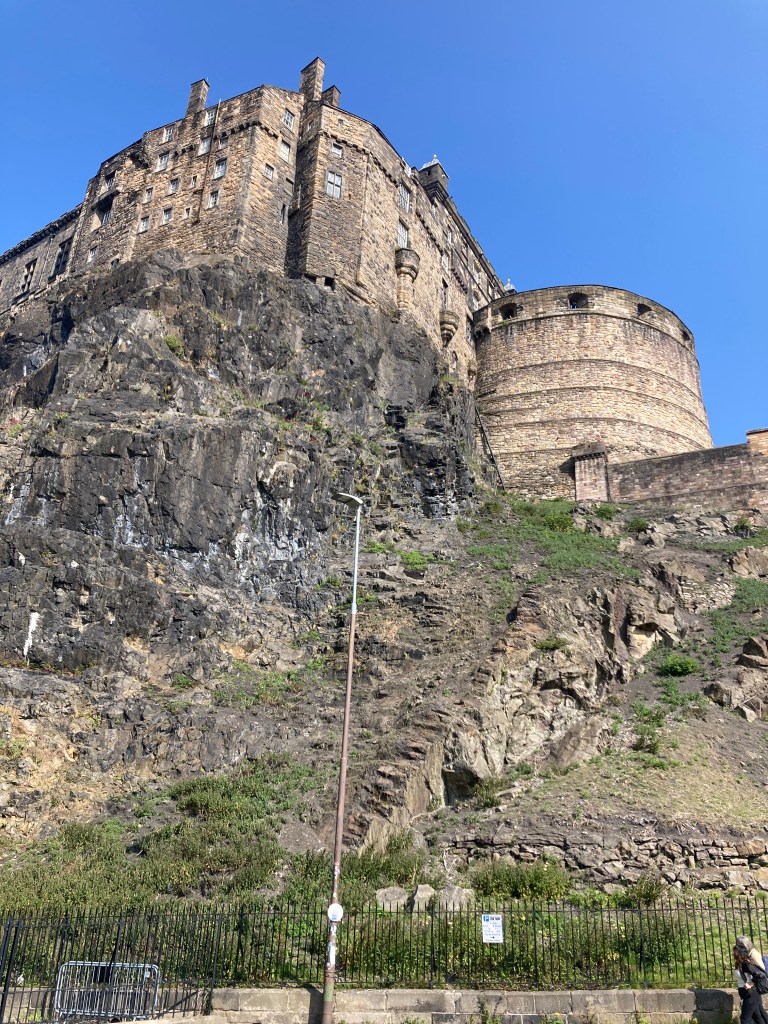
Edinburgh Castle dominates the city, sitting atop a volcanic plug. It is a fascinating site and highly recommended. If you choose to go, get the earliest booking you can – hopefully before the myriad tours swamp all available space and create substantial queues.
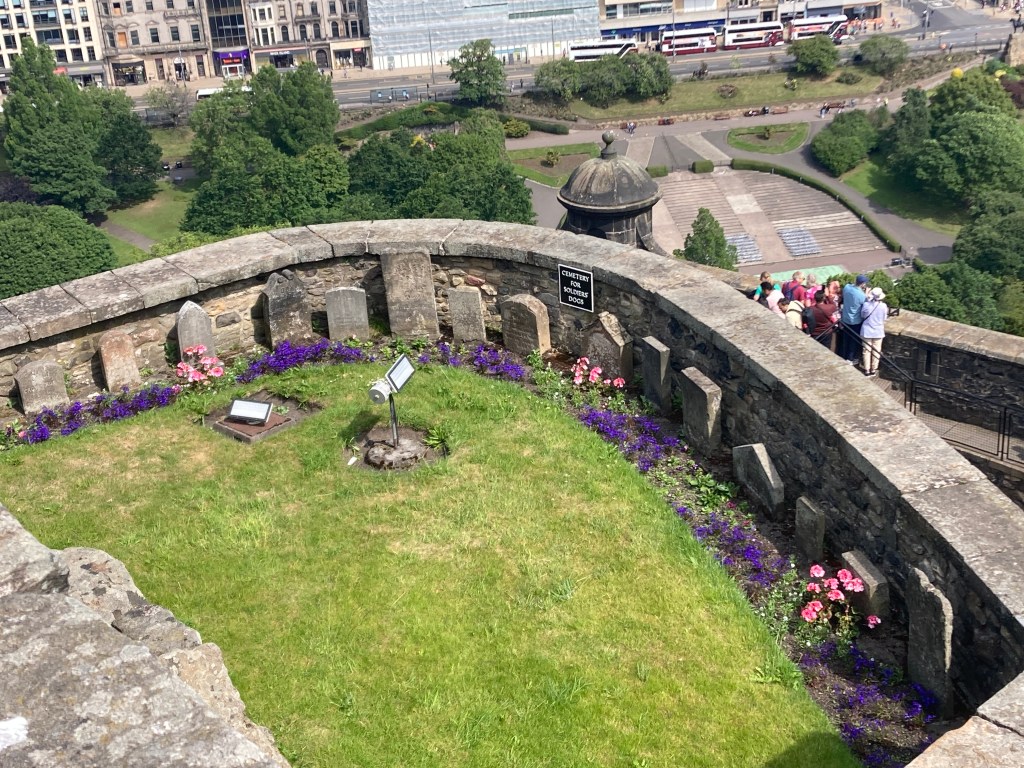
The Soldier’s Dogs Cemetery within the walls of Edinburgh Castle
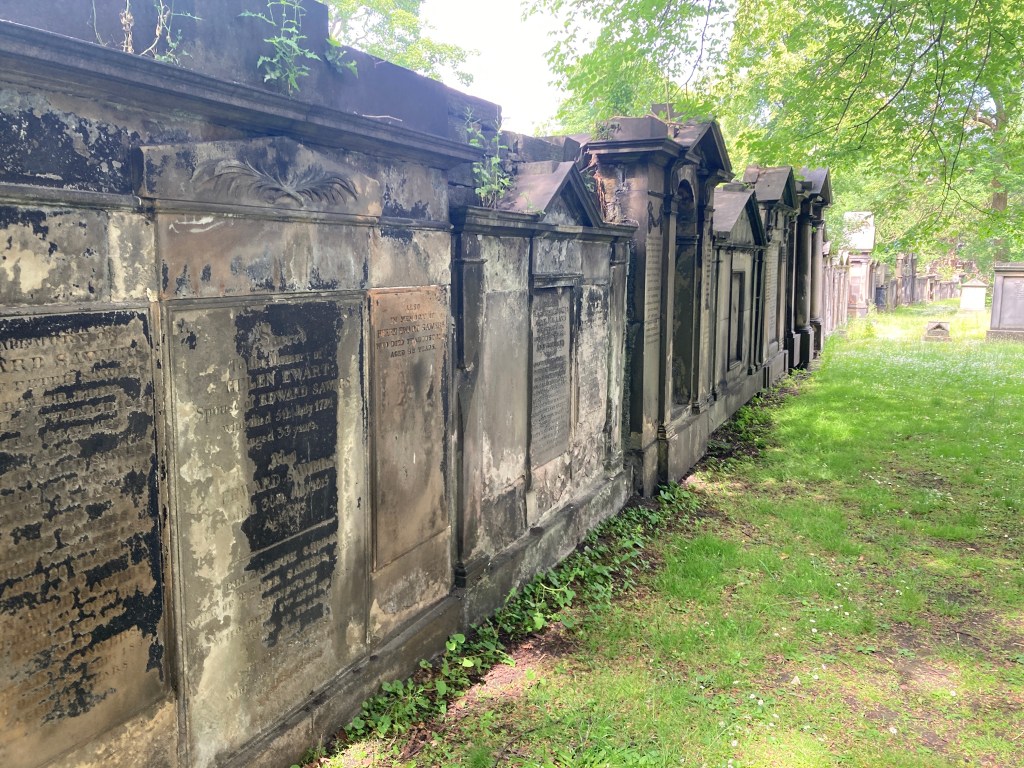
Below are a couple of pictures from St. Cuthbert’s Churchyard. They are just an example of what can be seen on foot in both the Old and the New Town. There is no shortage of monuments, architecture, and statues. Many of the streets are cobblestone, wear appropriate shoes. But be sure to walk the city.
St. Cuthbert’s Churchyard
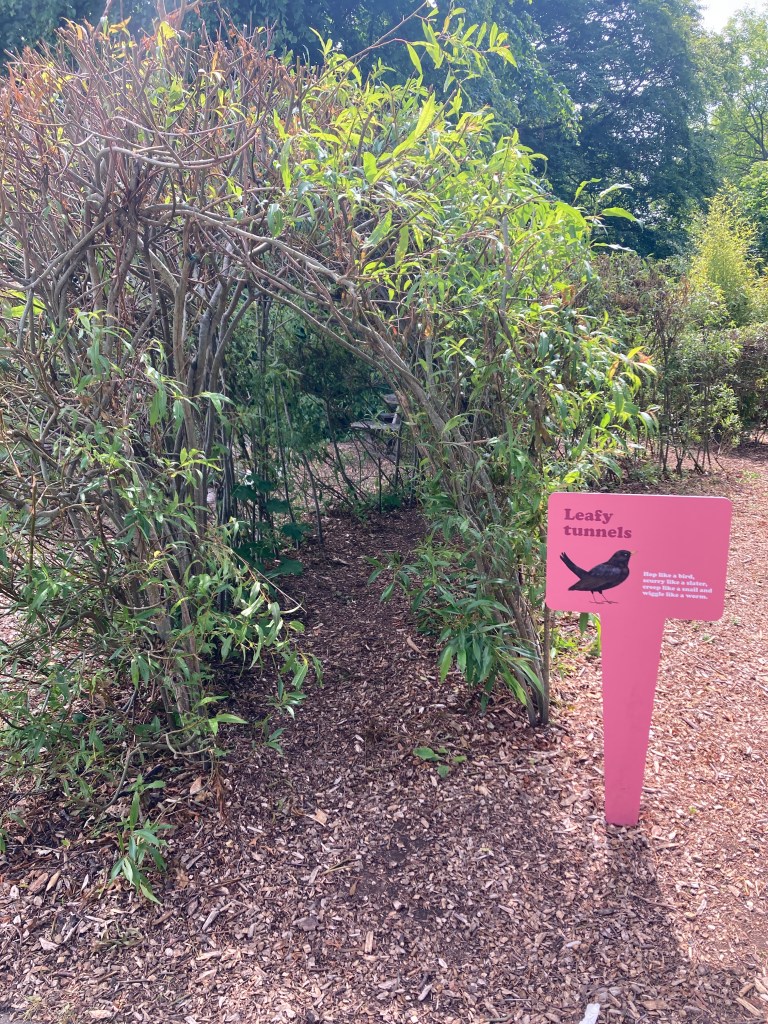
The Royal Botanic Gardens are amazing. At least what I saw of them – my legs were starting to give out. On the top of the list the next time I’m in Edinburgh.










 The Journey