York, England

York is old. It also seems, by a combination of luck and intention, to have preserved a potpourri of structures from the 1st century and proceeding continuously to the present day.

York’s walls are the longest in England and their preservation can be credited to the Archbishop of York, who got pissy when the city tore down the Skeldergate postern in 1807. The Archbishop sued the city and won, effectively preventing any further demolition of the city walls.
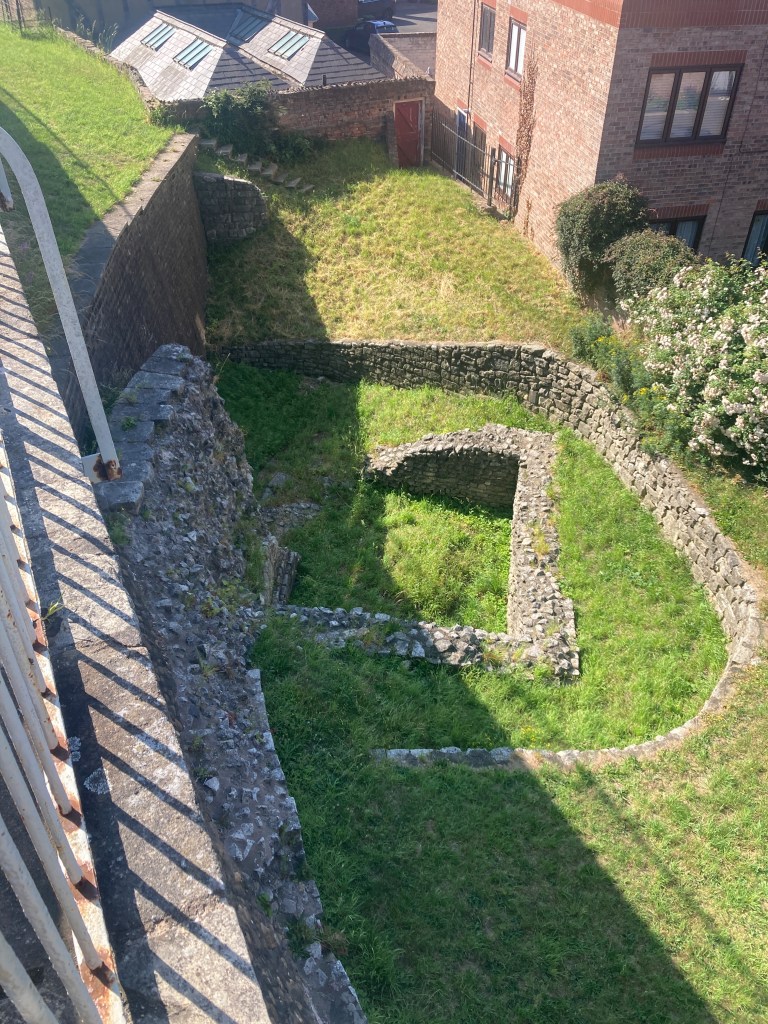
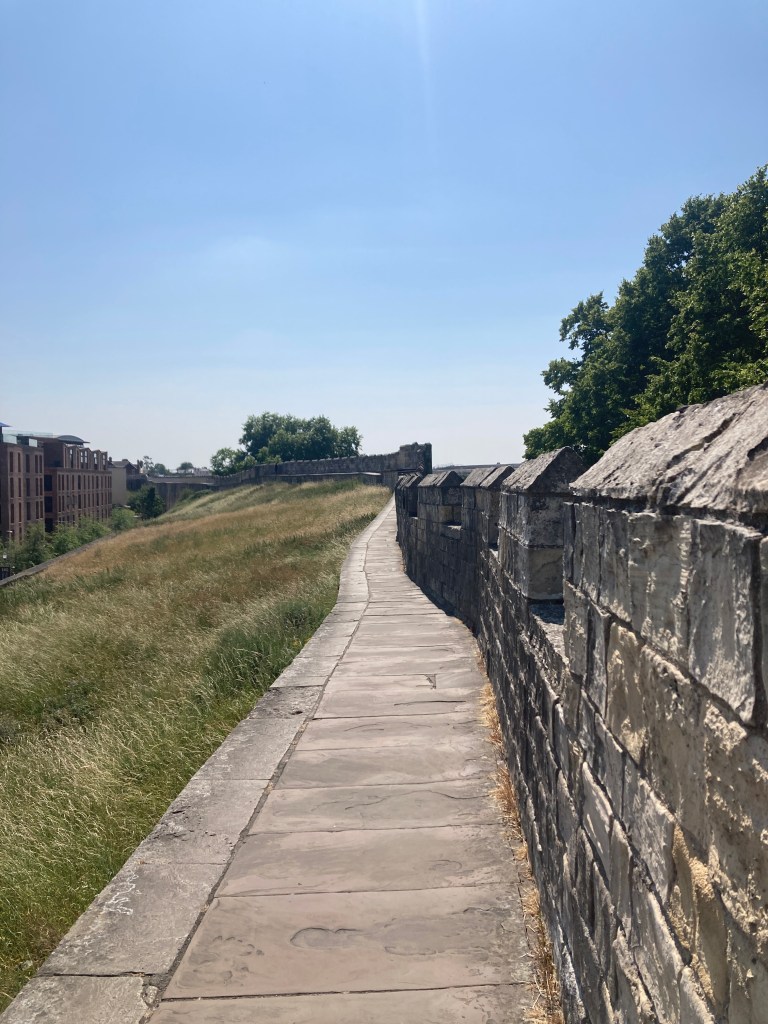
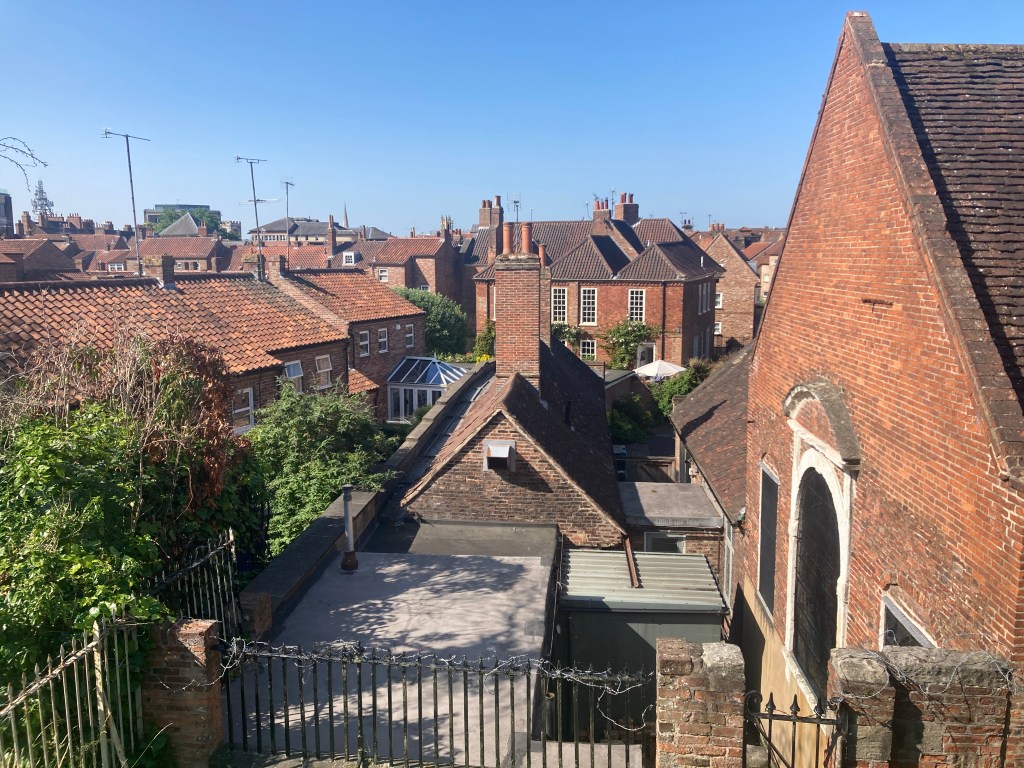
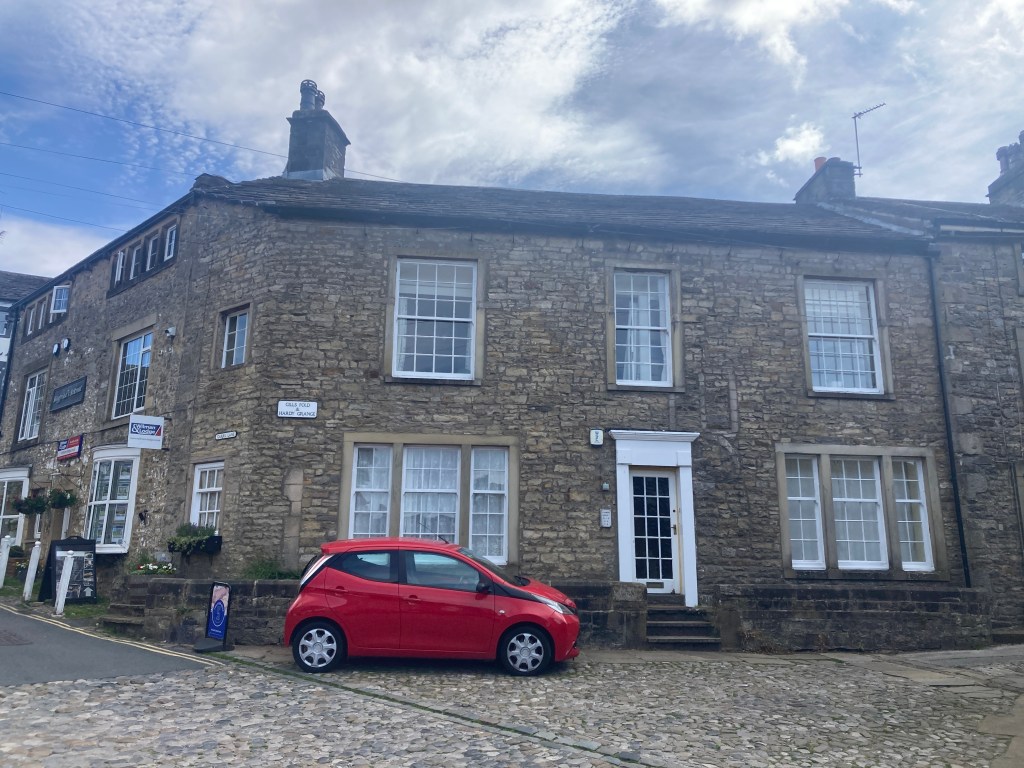
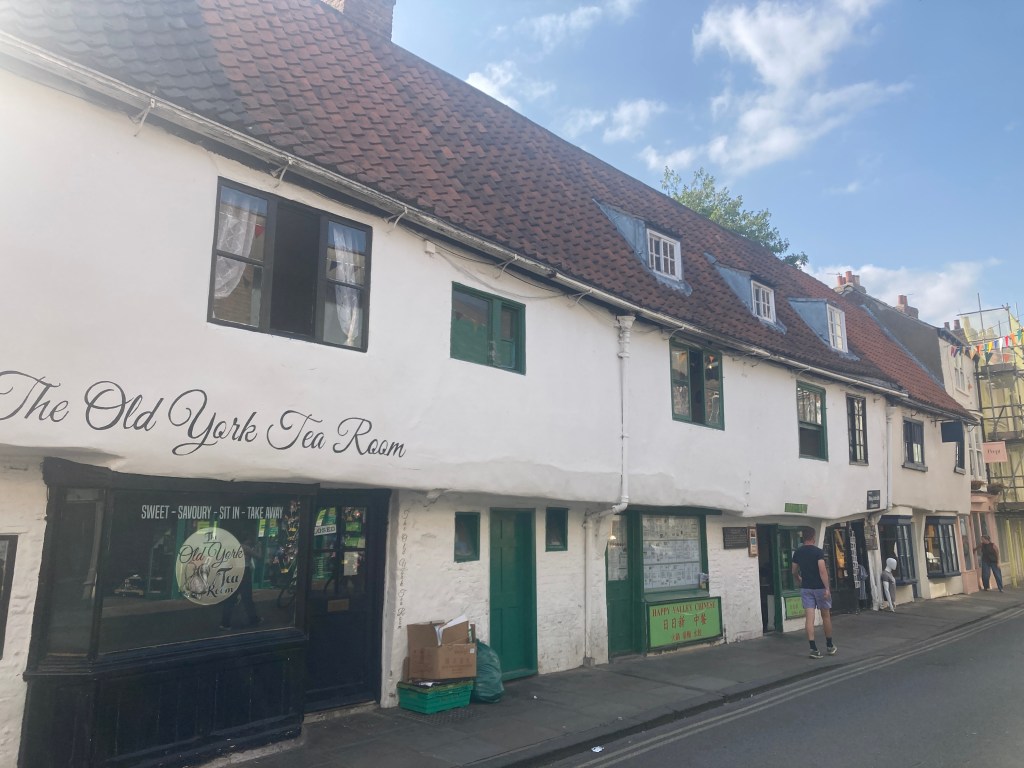
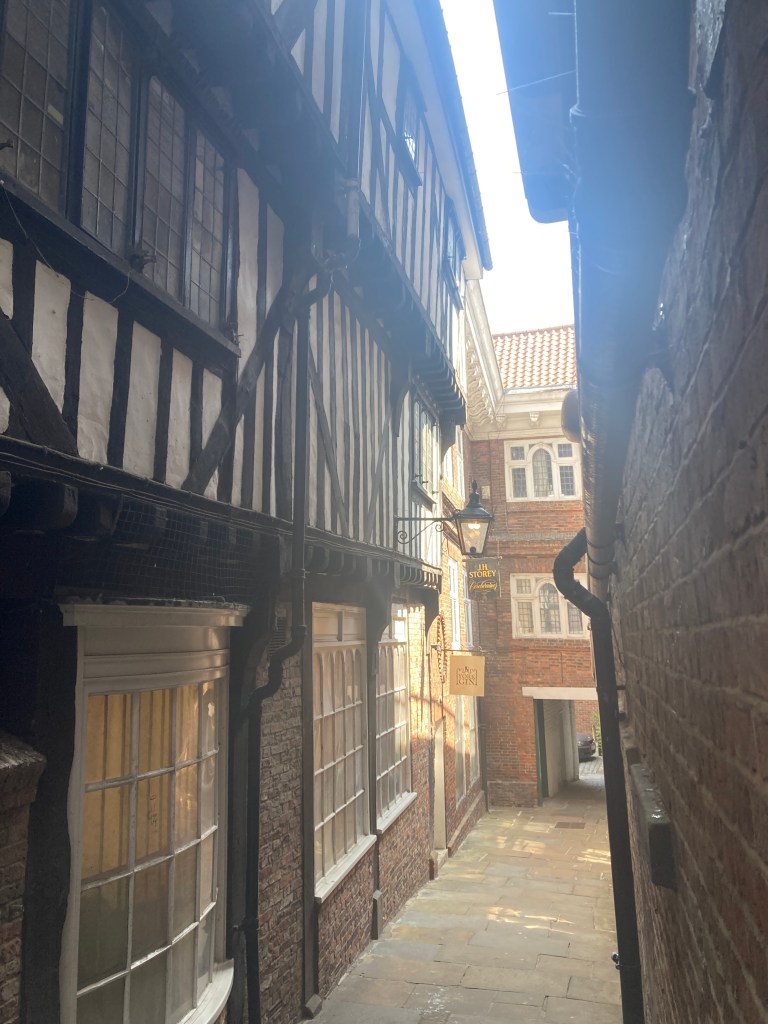
The variety of the city is best seen on foot. Below are just a few random examples of differing era buildings. There can be a large assortment of ages in a very small distance.
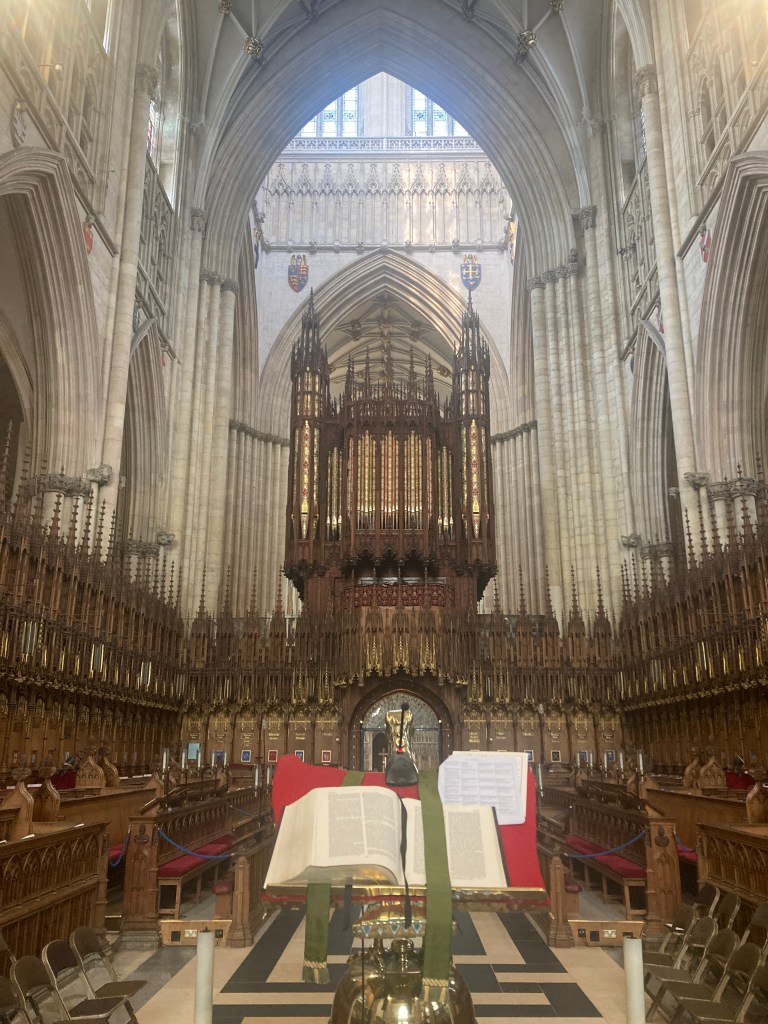
I spent four days in and around York. But I spent the largest amount of time at Yorkminster. Six hours one day, and then back on another day for 4 hours. The Minster was built between 1220 and 1472, but sits atop an earlier cathedral built in 1160. Which in turn was built on top of the Roman barracks in Eboracum built in 62 AD. There were two earlier church close by built prior to 1160, but there exact location is unknown.

You may not want to spend the ten hours that I did in Yorkminster, but I strongly recommend taking the one hour guided tour included in admission and maybe another hour just wandering around being surprised.

I took the add-on tour of Yorkminster’s crypt. This behind the scenes tour provides a chance to see evidence of the roman building and substantial portions of the 1160 footings and perimeter of the 1160 church. You can also see where massive new concrete and steel installations were made in the late 1960’s to support the central tower that was in danger of collapse. If the tower rescue is your primary interest, you don’t need to do the special crypt tour, you can see it better in the Undercroft museum which is included in admission.

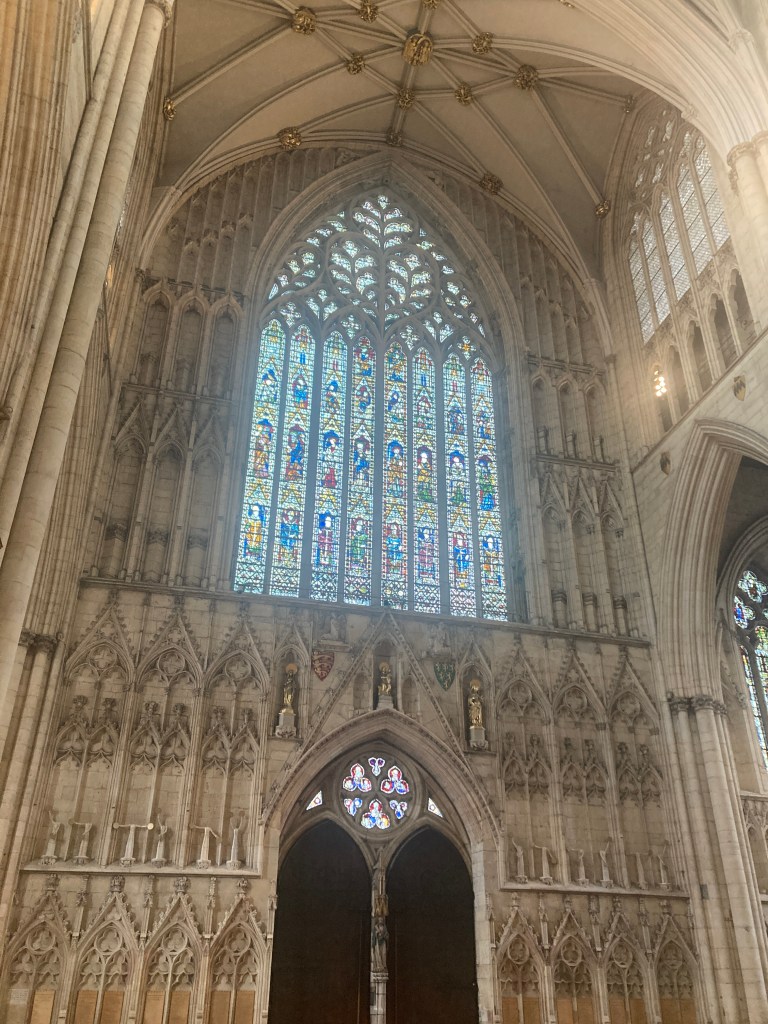
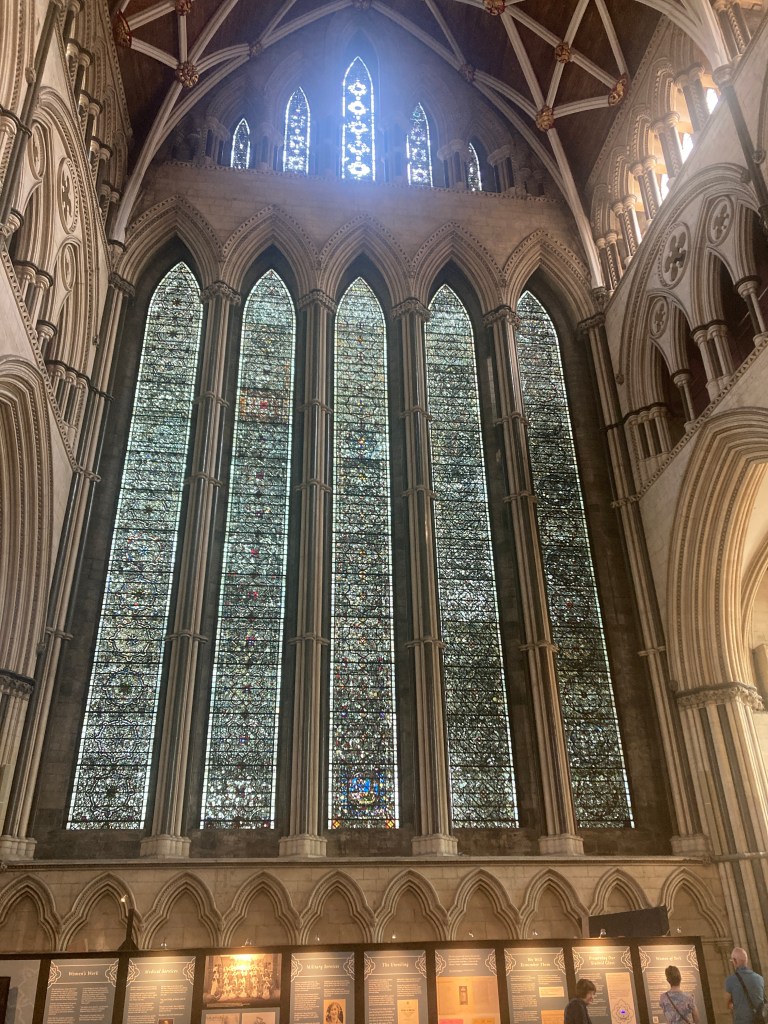
The amount of stained and painted glass is staggering, and like so much of York, spans centuries. The Five Sisters window in the north transept is the largest expanse of 13th century grisaille glass in the world, stained with a silver oxide to produce the characteristic gray colors. The Great West Window is also known as the Heart of Yorkshire and was built between 1338 and 1339. The East window (top of the page) is the largest medieval glass window in the world.
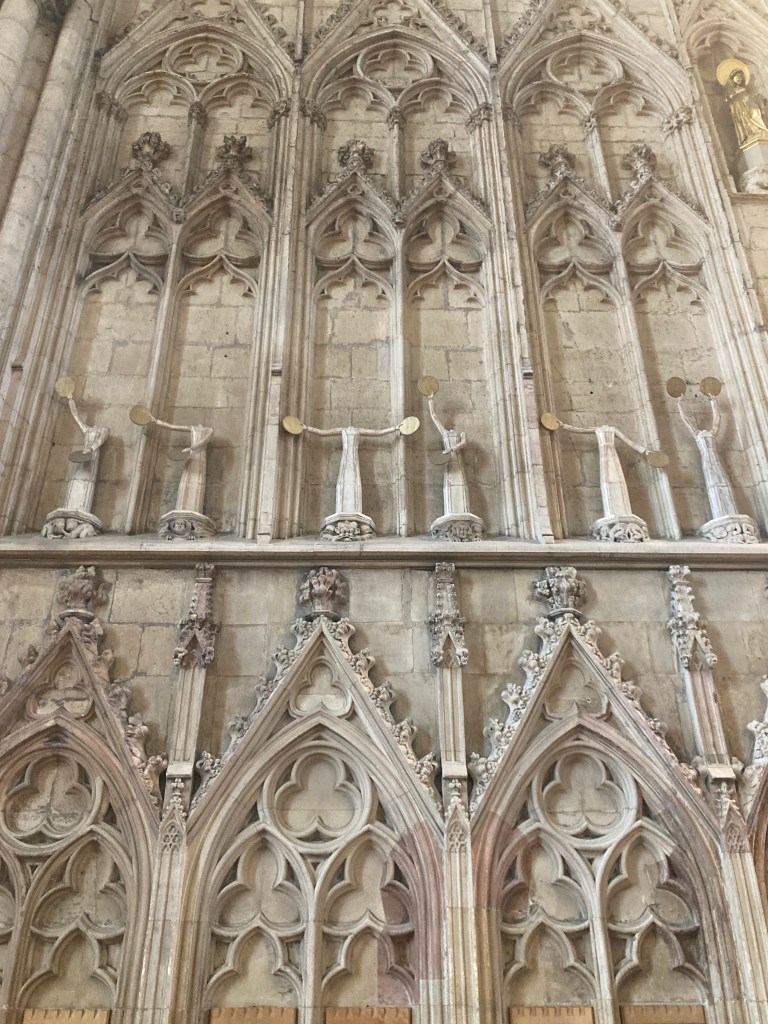
Not everything is 14th century. The Semaphore Sisters date from 2004 and are found in the west wall. They were gifted to the Minster by the artist Terry Hammill.
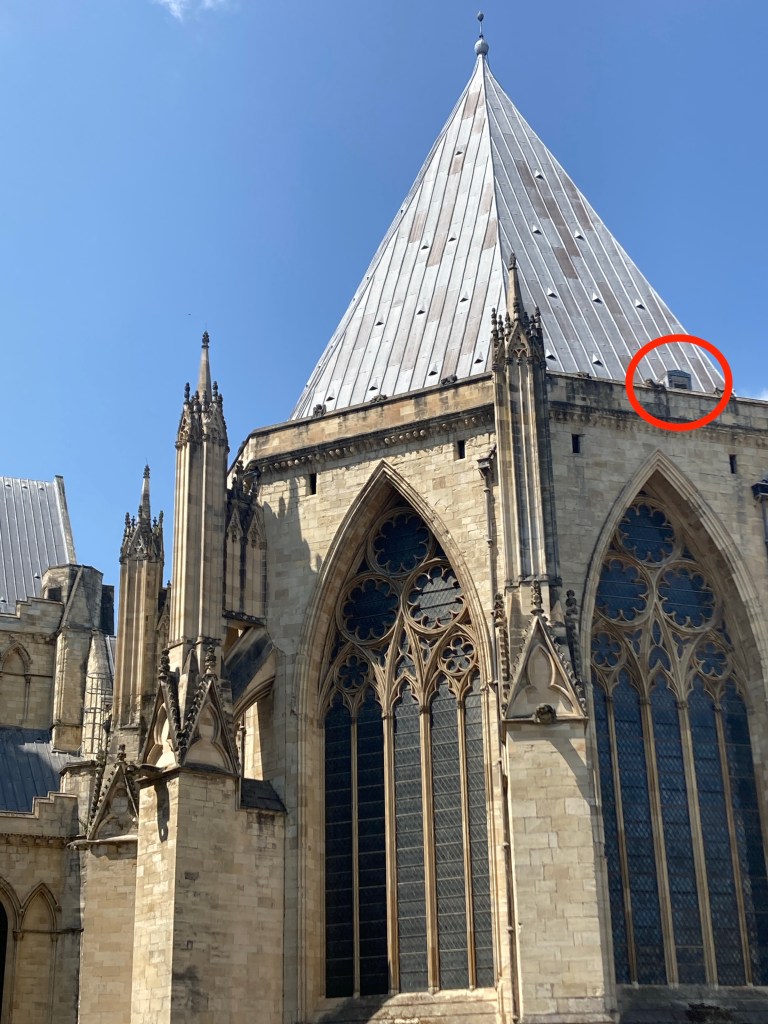
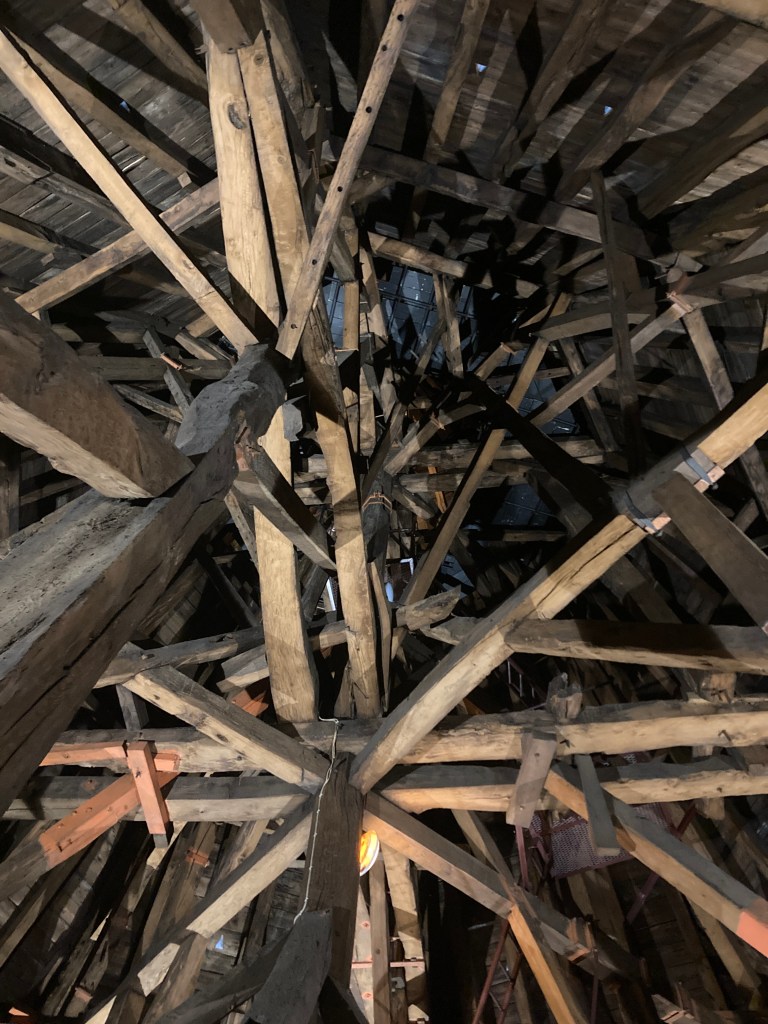
But of everything at Yorkminster, I was most affected by the Chapter House Roof Tour. The chapter house is 63 feet across and has no central support column. It is amazing engineering for the 13th century and the only design of its type in the world. The tour goes up a small spiral stair, making a stop at the Head Mason’s drafting floor to see stone work templates and how they were used to layout complete structures. One then continues up the stairs and exits unto the lead roof, walks along the gutter (there are guardrails where you walk) and re-enters the building through a small door into the roof structure.
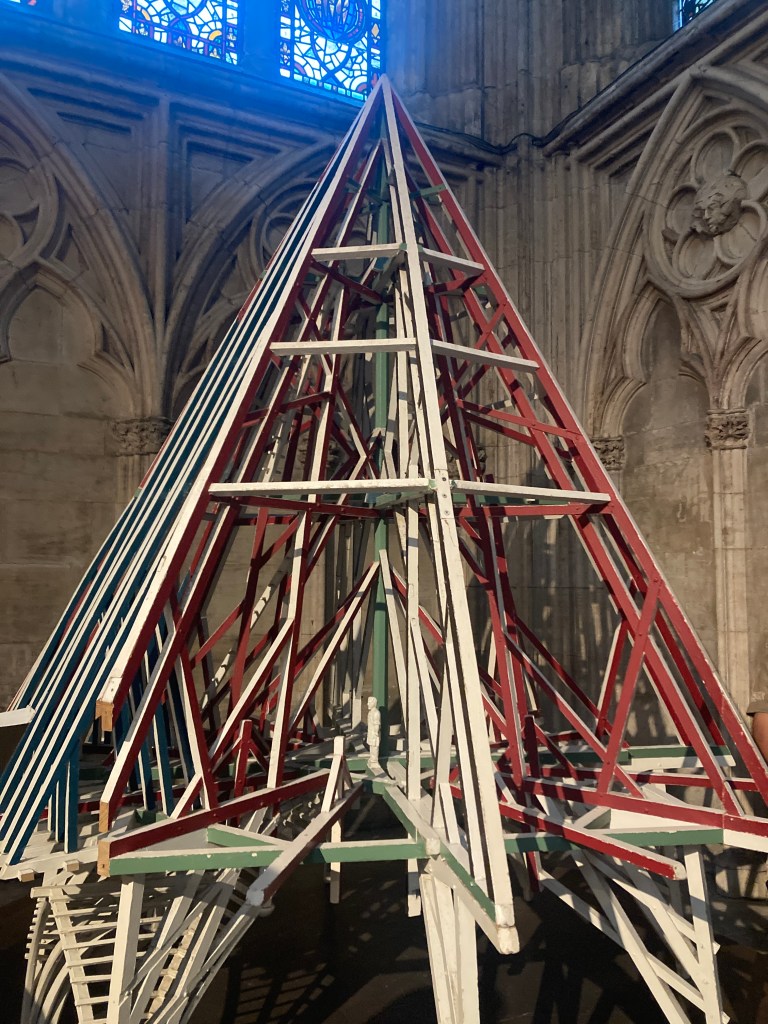
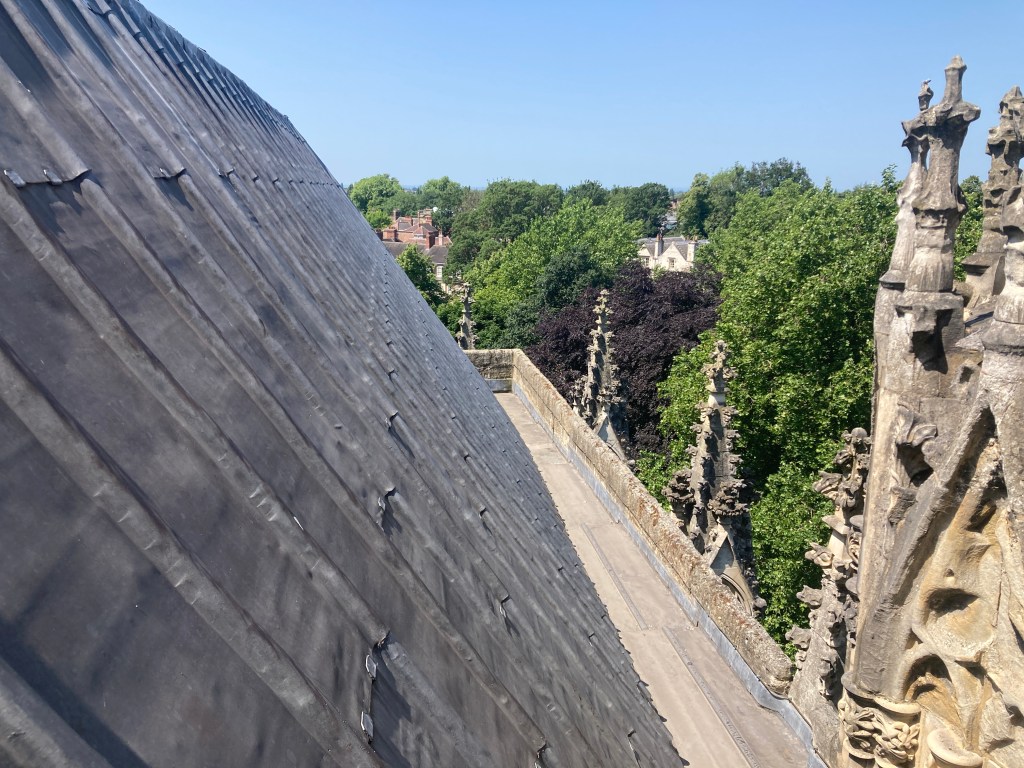
Stepping through the door, and allowing time for your eyes to adjust, this is what you see. My photo doesn’t do it justice. But the tour guides are able to put the whole thing into perspective, and describe in some detail how it all fits together.
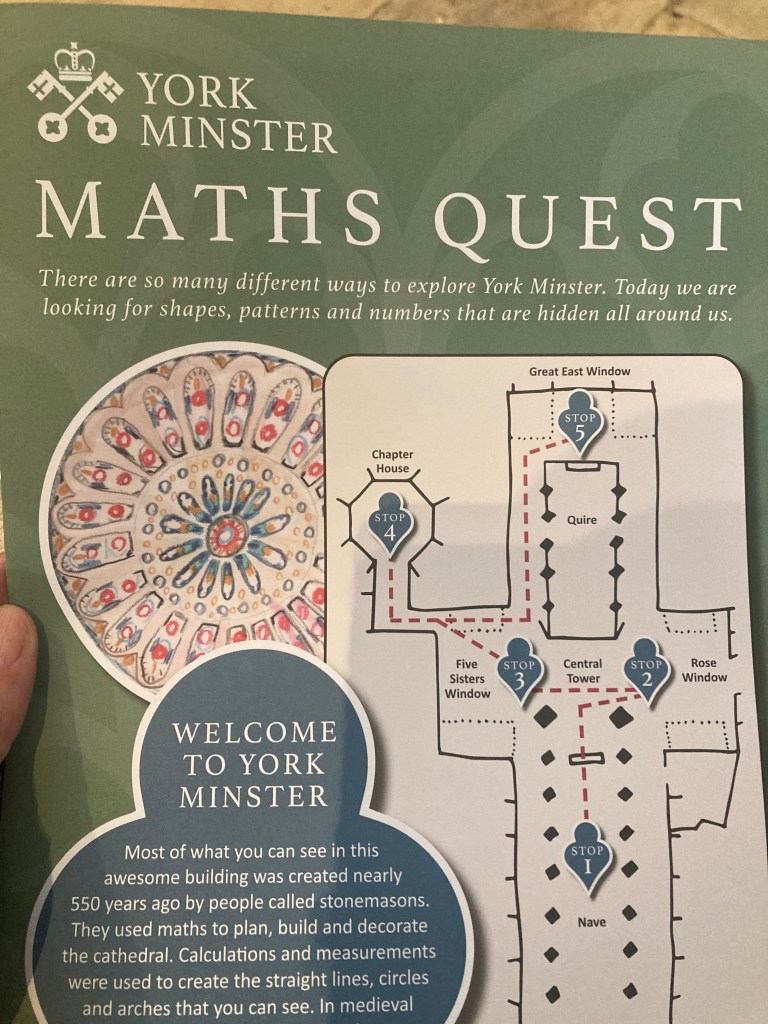
On entry, there are several different “quests” for children. The Maths quest was my favorite.

And just another cultural reference – this is the Mallard train so special to Dr. Donald Mallard on NCIS.

Yorkshire Dales National Park

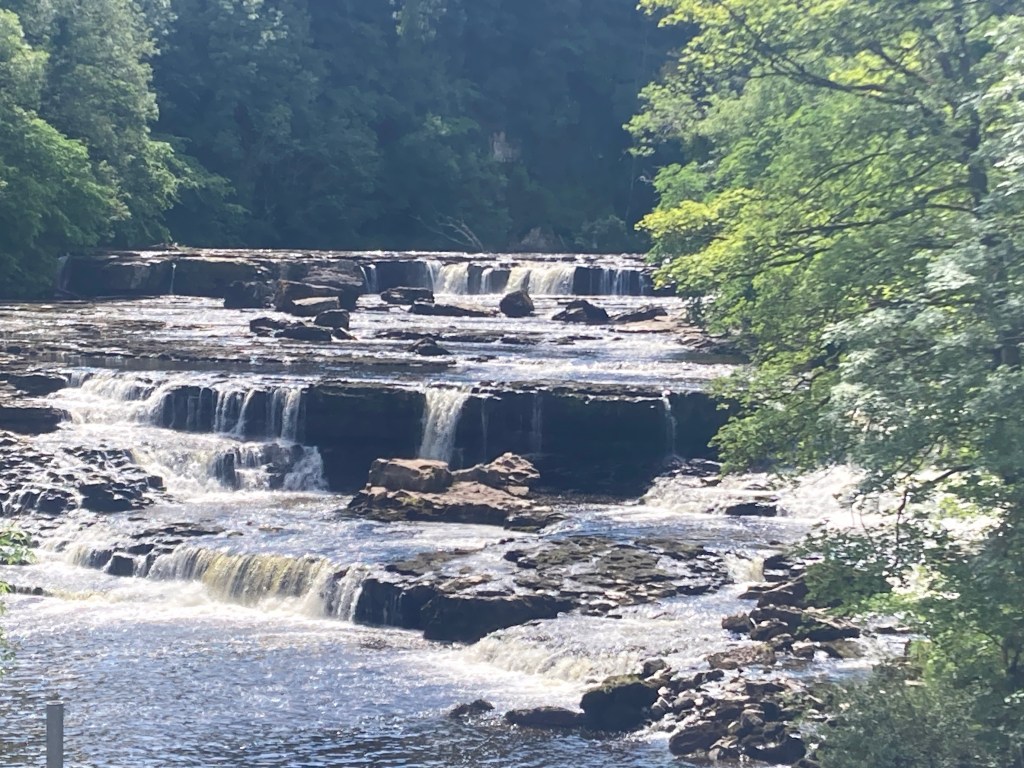
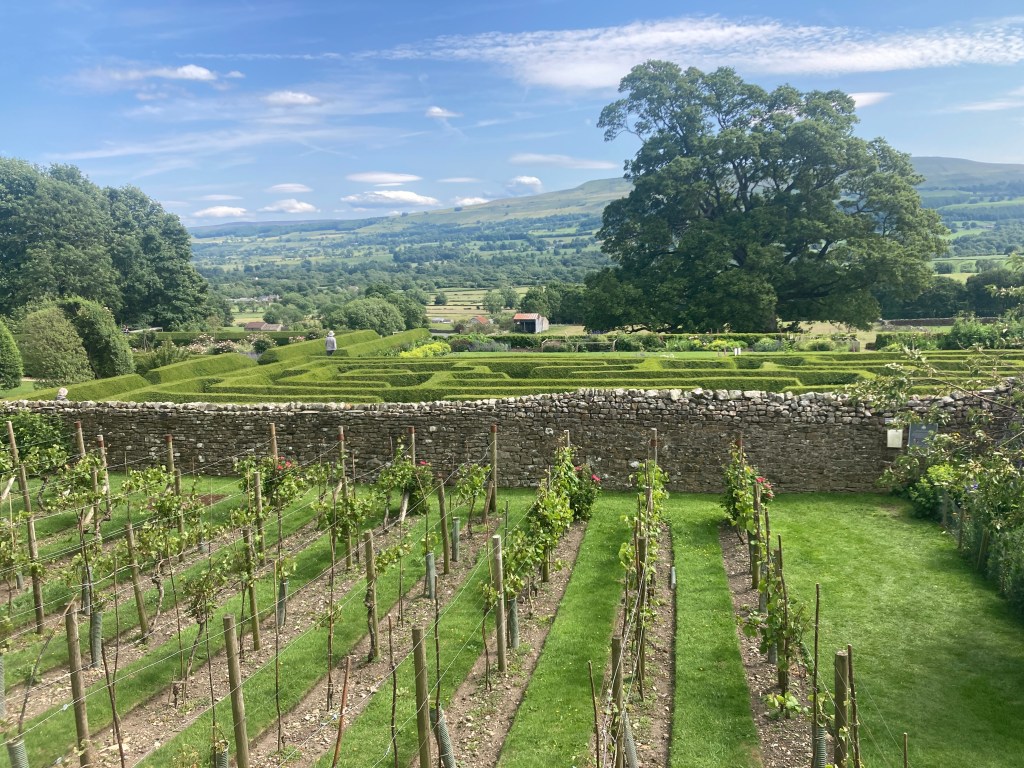
I booked a bus tour of the Yorkshire Dales to see the countryside. The “dales” are valleys located in the western part of Yorkshire and primarily in the Yorkshire Dales National Park in the Pennine range. I went for the scenery, but I got much more. Which makes for a good opportunity to give a shout out to Mountain Goat tours https://www.mountain-goat.com/Yorkshire. I did two different tours with them from York and had a comfortable seat and a knowledgeable guide on both.
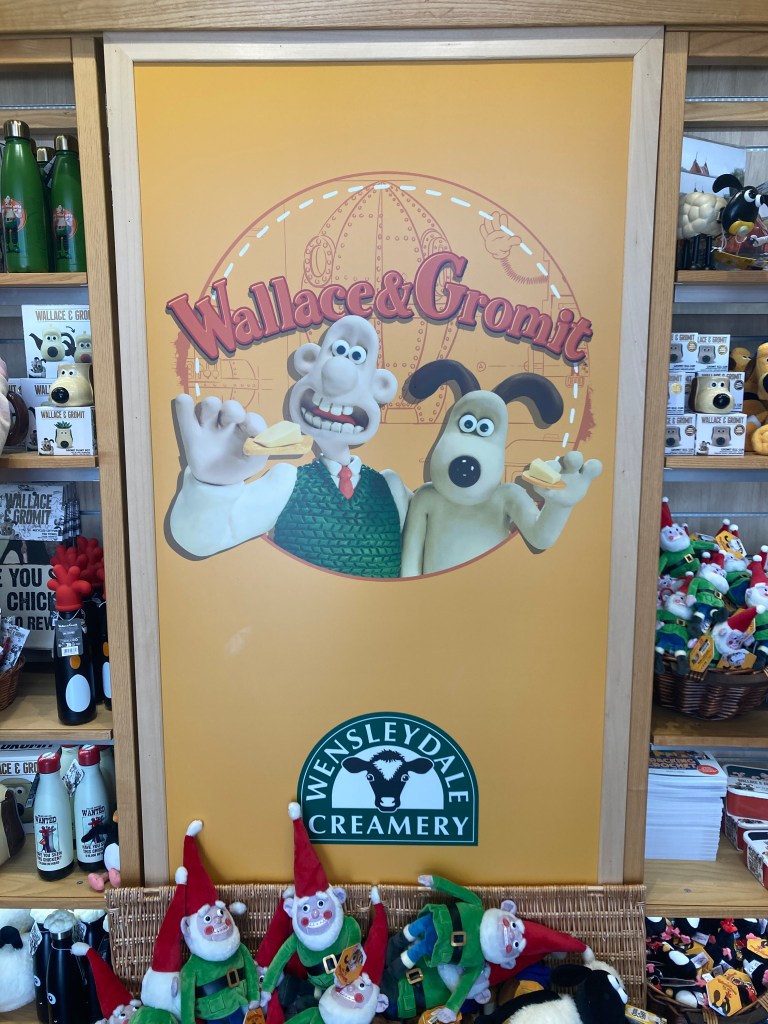
One unexpected thing from the tour were the cultural references of which I am woefully uninformed. I may have been the only person on the bus (only 10 of us) who wasn’t familiar with every scene of All Creatures Great and Small. And apparently Wallace & Gromit fame saved the Wensleydale Creamery from insolvency.

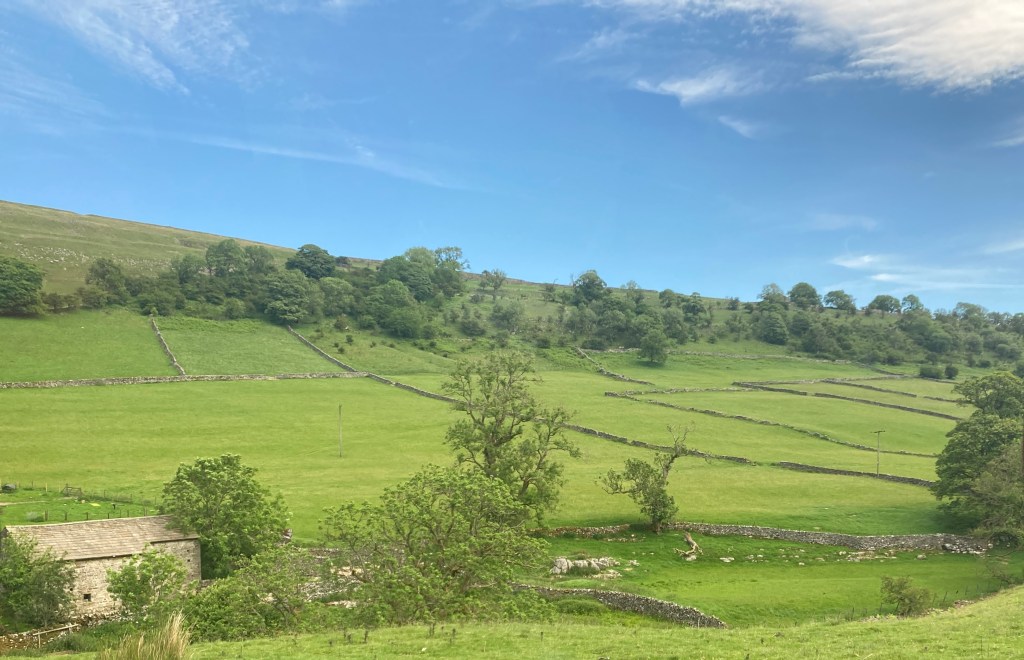
The other bonus was the ties to my current reading, The Making of the English Working Class by E. P. Thompson. The West Riding of Yorkshire figured prominently in the Industrial Revolution. I could see the evidence of Enclosure in the ubiquitous dry laid stone walls. Many of the towns and villages were familiar as wool mill towns.

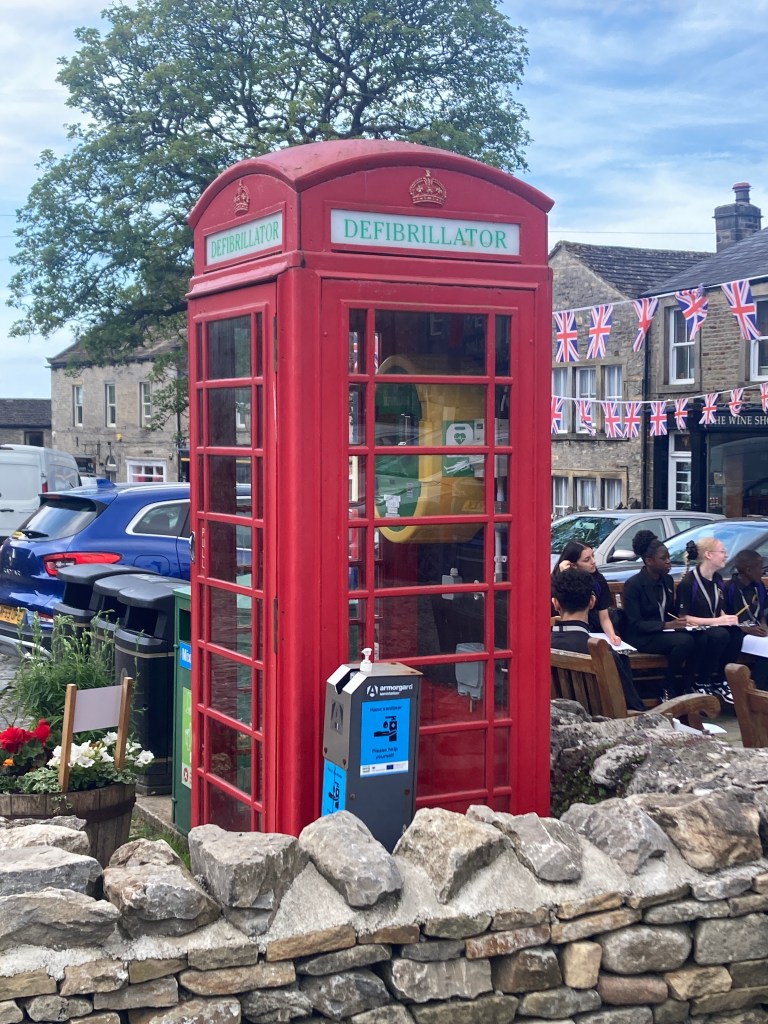
I found the re-use of the telephone box pleasing.

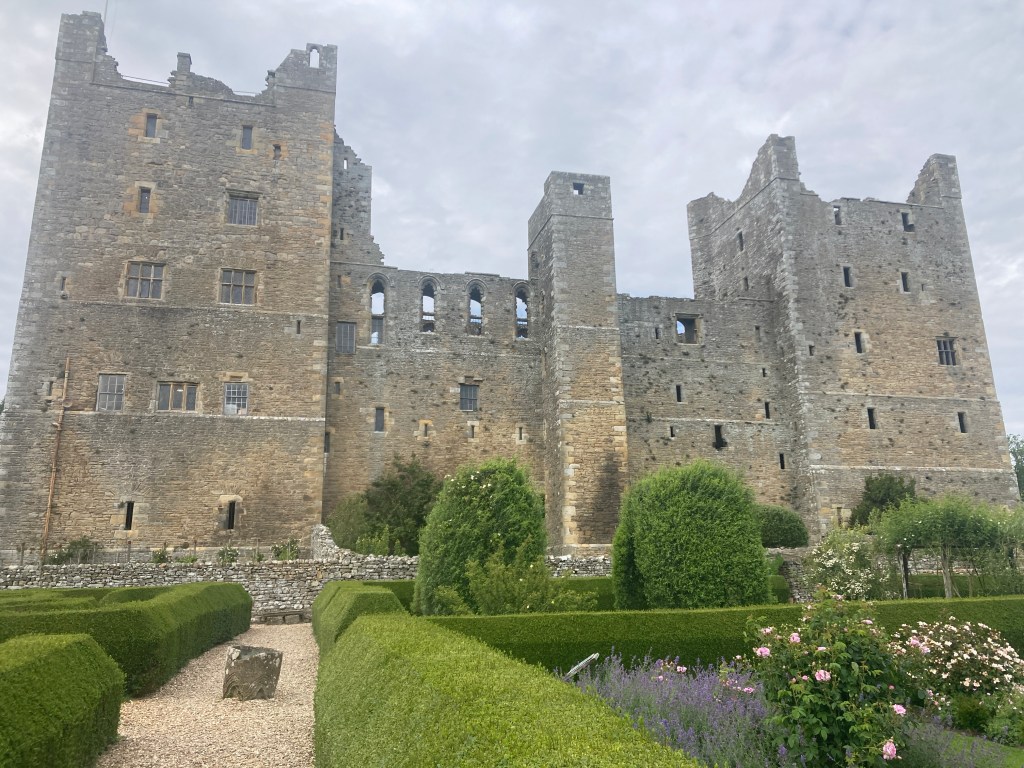
I’ll close out with Bolton Castle, built by Sir Richard le Scrope, the First Baron of Scrope, in the late 14th century. Despite several Scropes that were convicted, and if caught, executed for treason, the castle is still owned by descendants of the Scrope family. Bolton Castle was the involuntary residence of Mary Queen of Scots for a time.

Sir Richard is my 16th great-grandfather but I didn’t realize that until after the visit, so no favorable treatment on the visit.

Glasgow, Scotland

I bungled my planning for Glasgow. After the ferry and the drive from Islay, the road closures in Glasgow, and getting my car returned, I didn’t check in until 4 PM. And my train to York was scheduled for 6:48 the next morning. That didn’t leave much time for poor Glasgow.

I didn’t mention it in the Edinburgh post because it didn’t seem significant. Just down the street from my hotel there was some sort of filming going on. The streets of Edinburgh are already quite congested and adding all the paraphernalia of a film set wasn’t helpful. But, it is what it is. Then I got to Glasgow and instead of being on foot, I was in a car. A car with a manual transmission, hilly streets, and the gearshift on my left. And both sides of the street in front of my hotel consumed by Warner Bros. trucks and security guards. No place to stop to drop luggage or register. I ignored them, stopped, and dropped my suitcase anyway, getting yelled at the whole time. I later learned that they not only commandeered the street, but they start work, loudly, at 5 AM.

The hotel turned out to be quite nice. It is apparently a repurposed building with some beautiful stained glass in the main stairwell. This one happens to be of the Glasgow coat of arms, featuring St. Mungo.

I got upgraded to a suite with amazing 15 foot ceilings. I wish I hadn’t mangled my schedule because I didn’t get to enjoy the room.

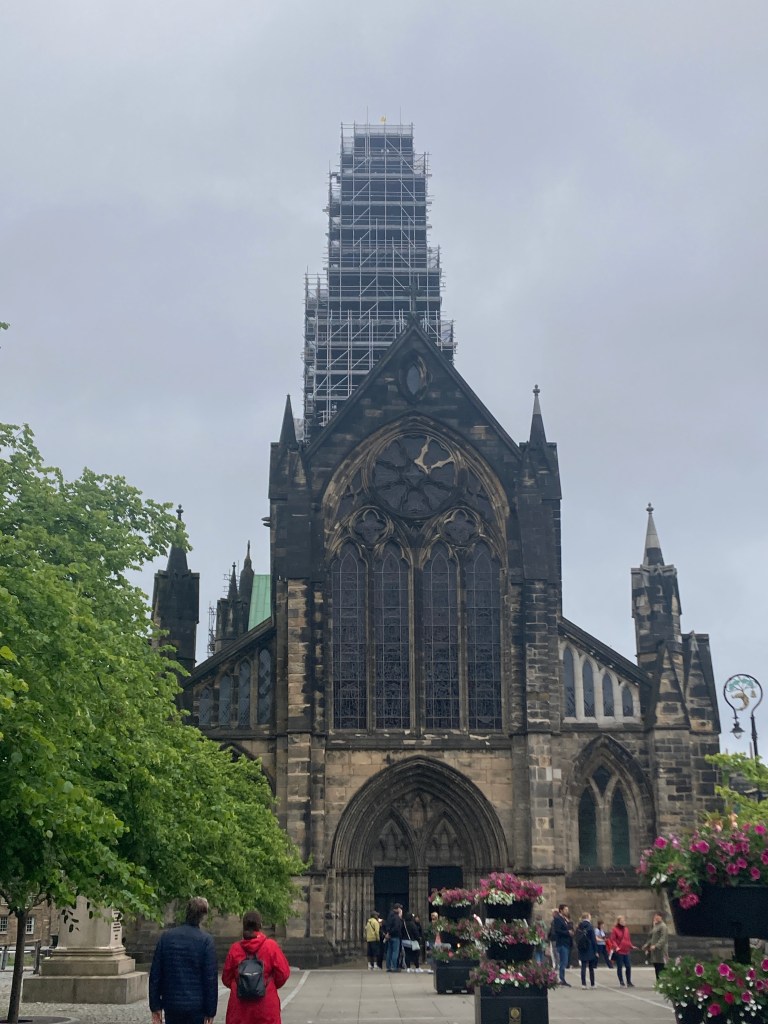
I arrived too late to get a look inside. This is the Glasgow Cathedral. Construction started in 1136 and was completed about 350 years later.

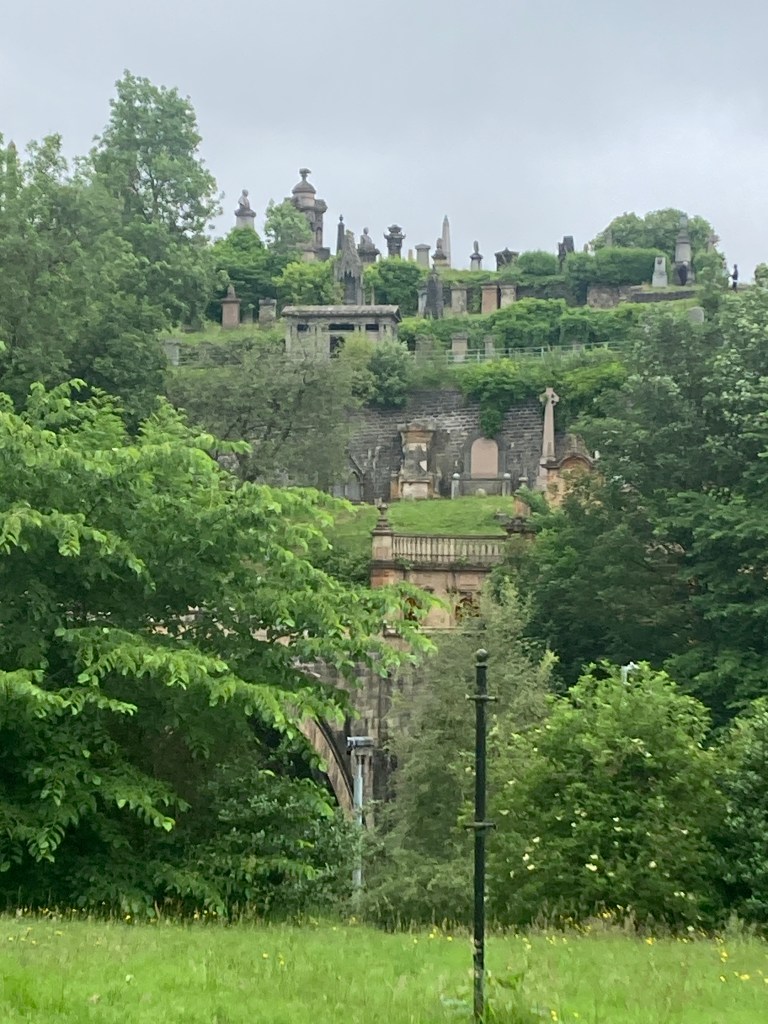
The major draw for me was the necropolis behind the church, a part of which can be seen in the photo at the top of the page and at right. I was too late for that as well.

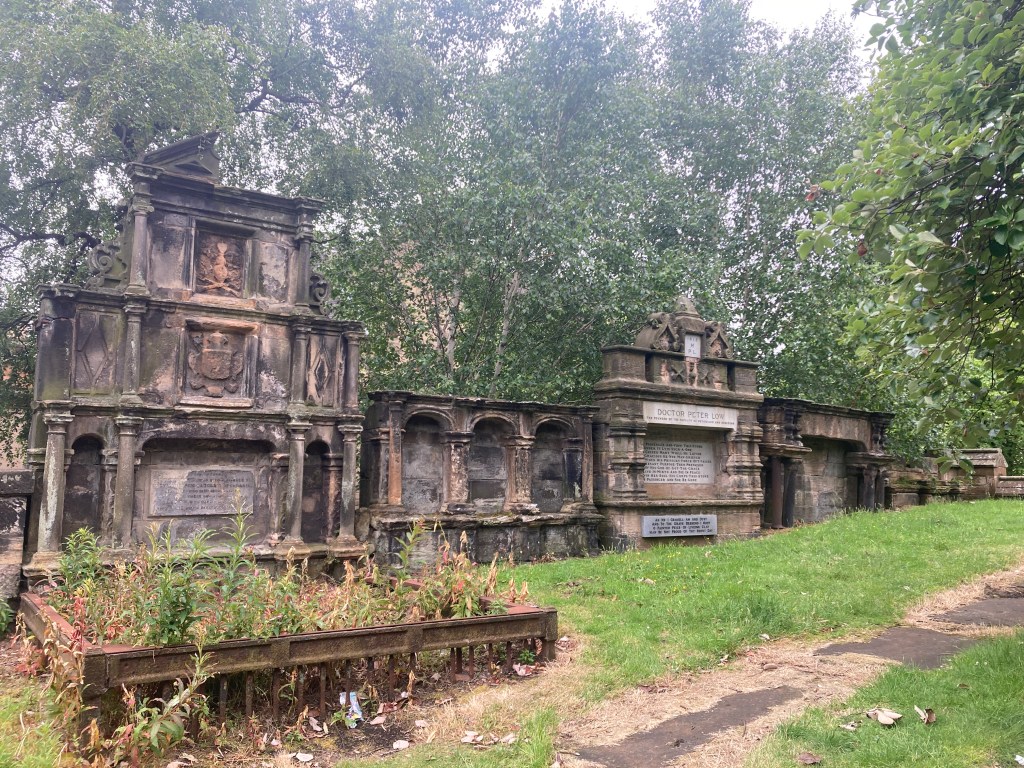
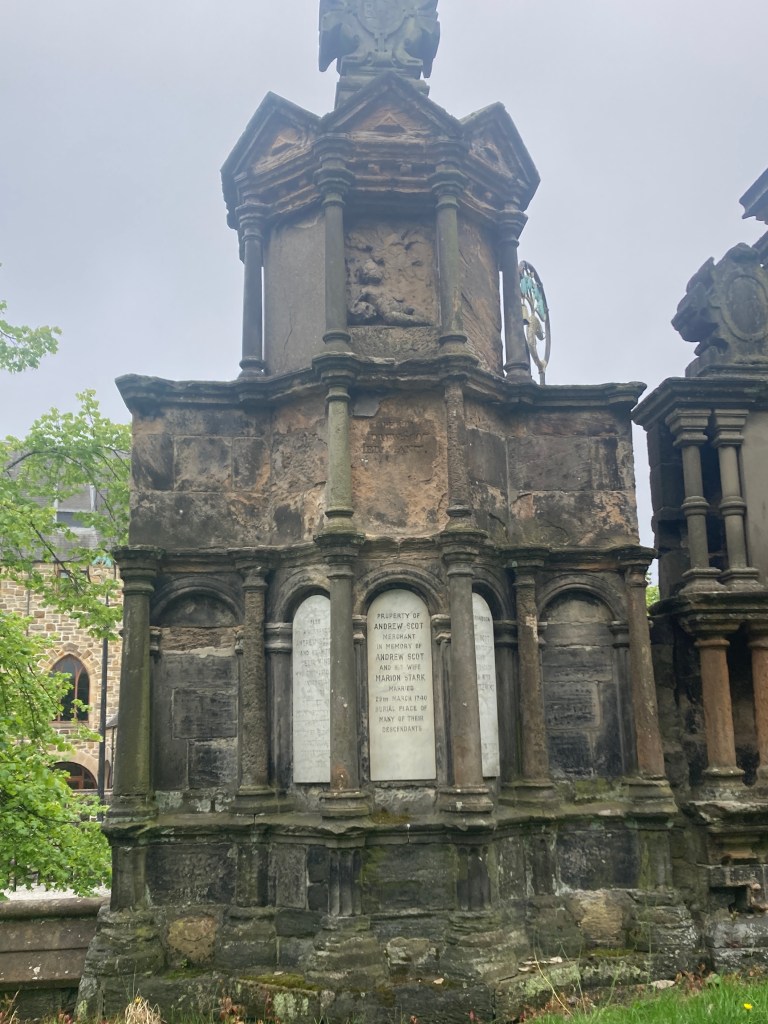
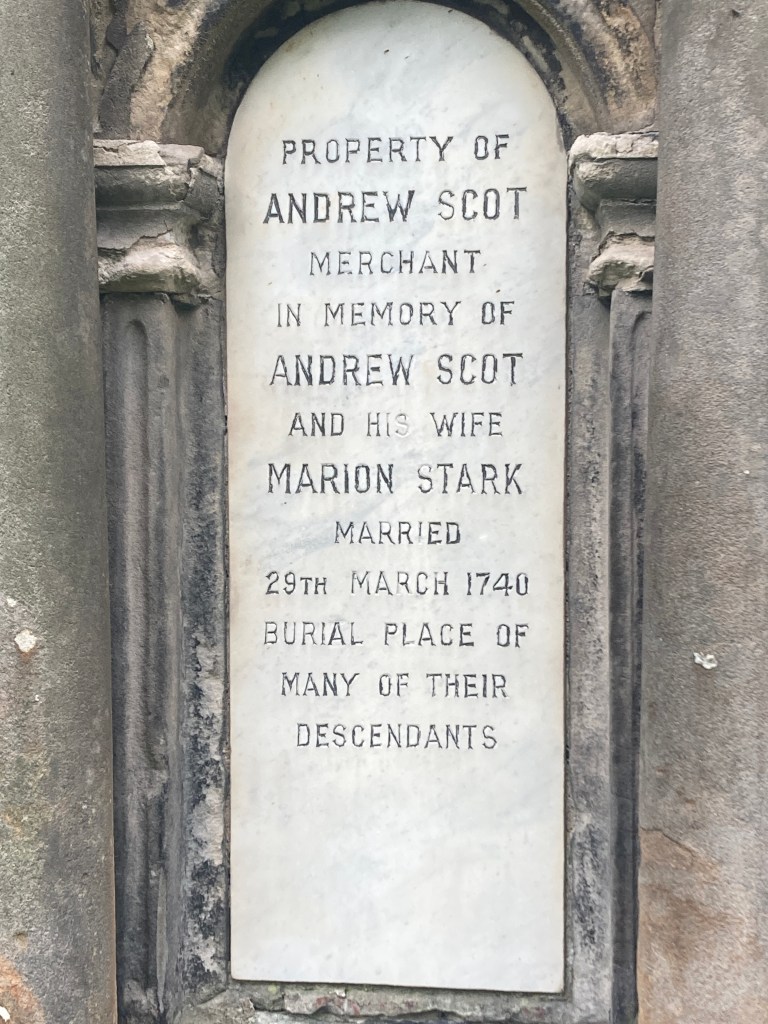
I was able to amble about in the cemetery abutting the cathedral. I had to smile, and acknowledge that I was in the land of Adam Smith, when the gravestone starts with “Property of…”

Edinburgh, Scotland

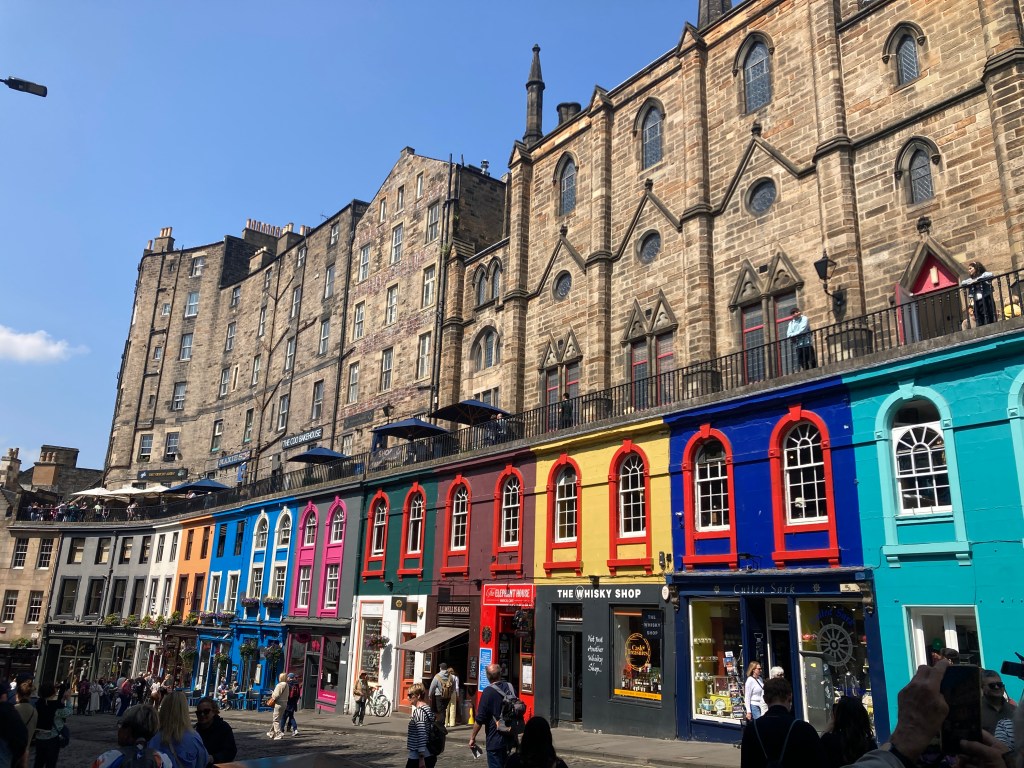
Victoria Street in Edinburgh’s Old Town. The street rises from Grassmarket up to the George IV Bridge. It is an example of the verticality of Edinburgh. A straight line is not always the easiest way to get around. Beware of “Stair” symbols on your map!

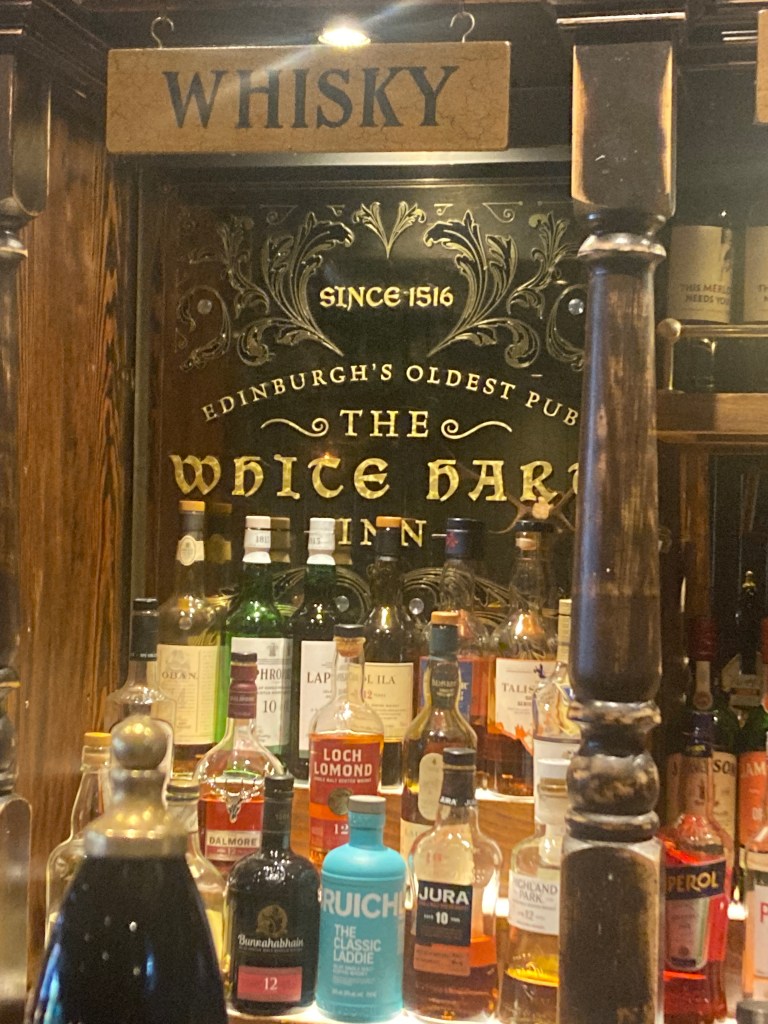
Named after King David I’s storied encounter with a White Stage while hunting, this bar’s cellar dates to 1516. Like most of the Old Town, the superstructure is much newer, in this case dating to the 1740’s.

Ironically, most of the Old Town (1860’s) is newer than the New Town (1767-1850). By the mid-19th century, the Old Town was a mess, with narrow streets and its geography restricting horizontal expansion, it had been forced to grow vertically. Over centuries, floors were repeatedly added to existing buildings, up to eight or ten stories being common and 14 stories not unknown. In 1861, the building next to Paisley Close collapsed into rubble. After the survivors were thought to have been cleared from the debris, a voice was heard saying, “Heave awa’ lads, ah’m no’ deid yet!”. The disaster instigated the widespread demolition and rebuilding of the Old Town to align and widen streets and improve sewer systems. https://www.edinburghexpert.com/blog/im-no-dead-yet-disaster-on-edinburghs-royal-mile It also seems have provided material to Monty Python.

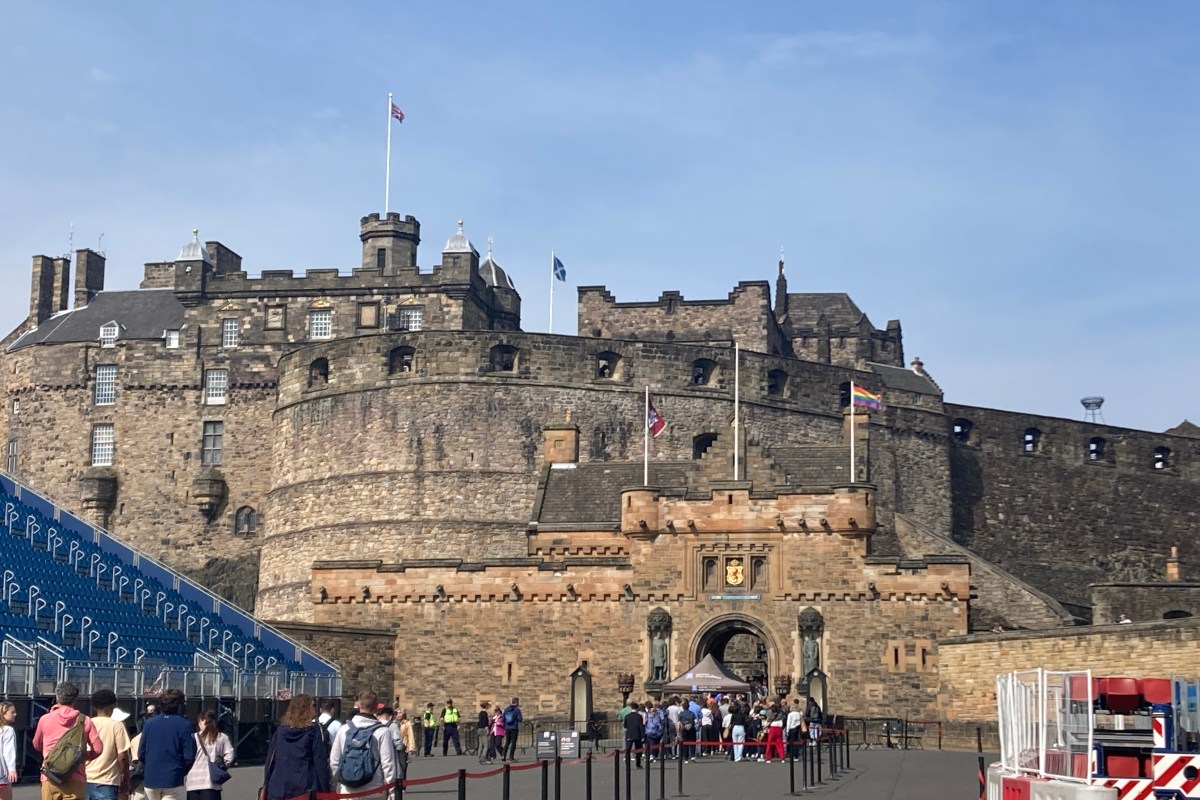
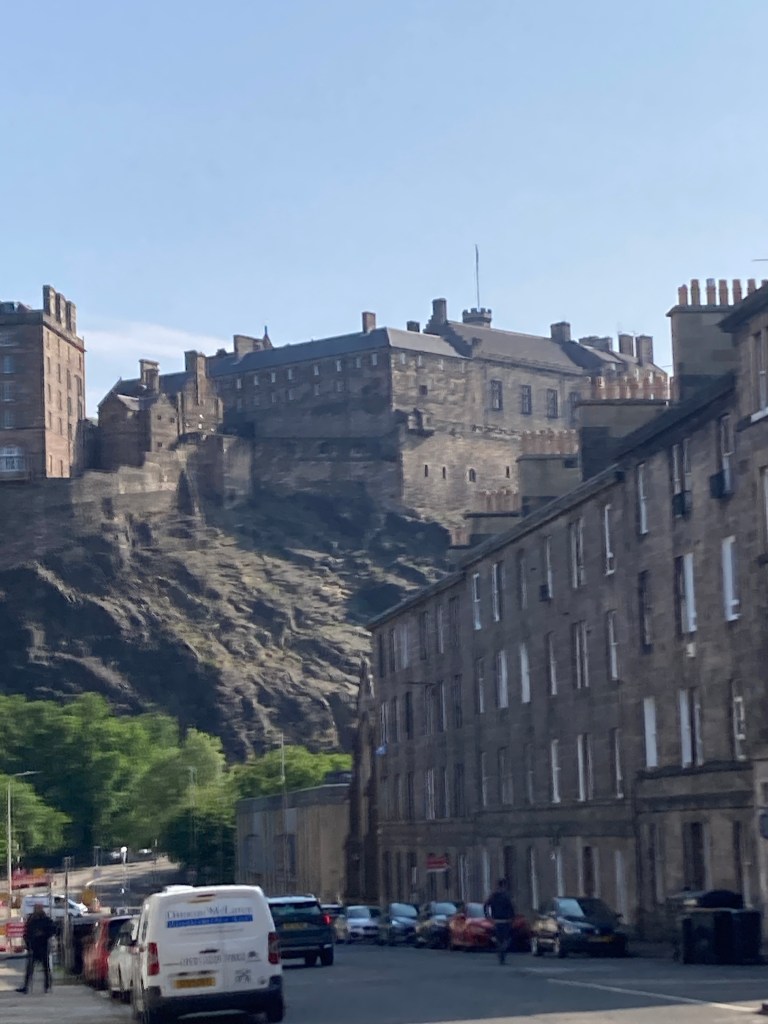
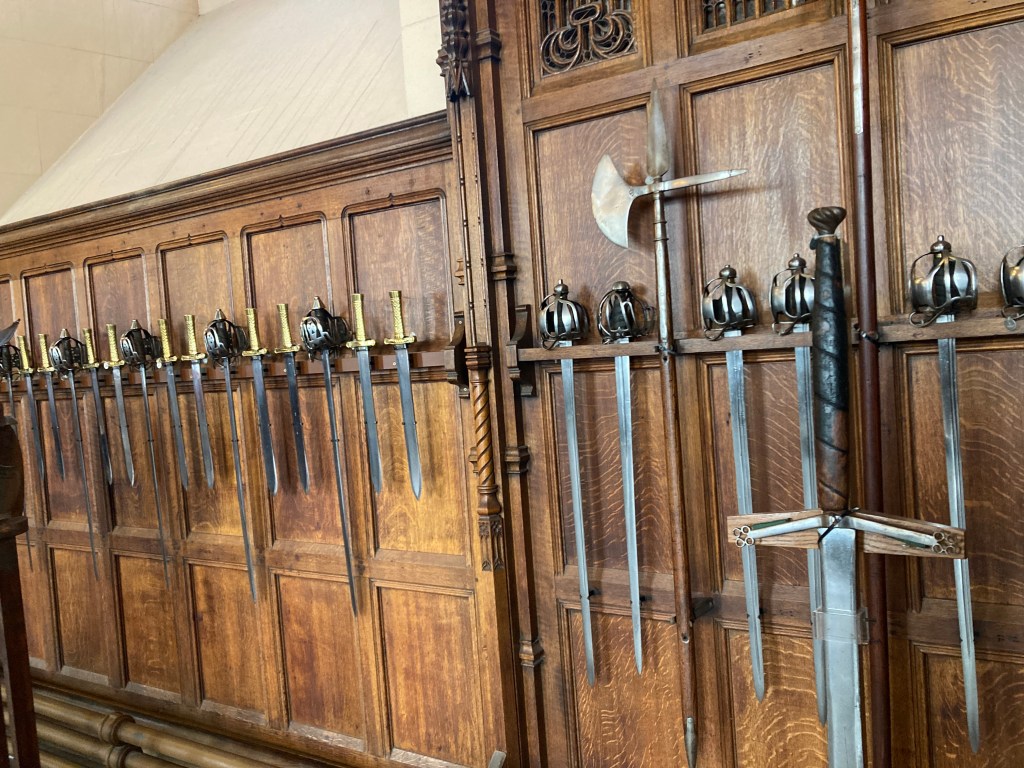
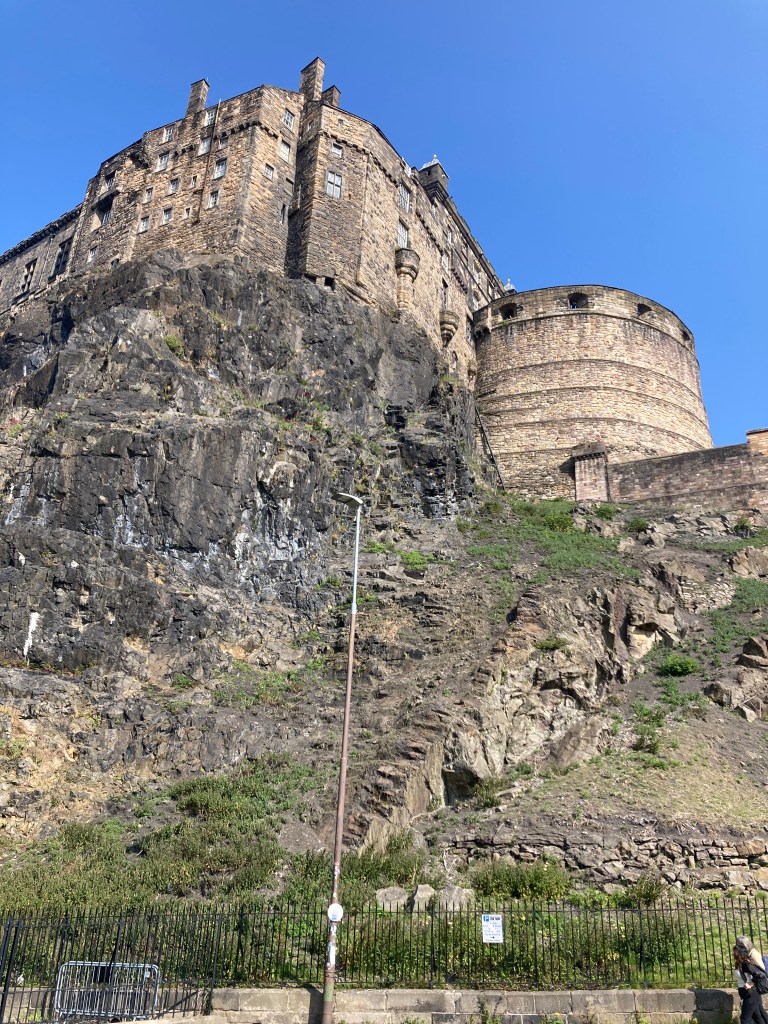
Edinburgh Castle dominates the city, sitting atop a volcanic plug. It is a fascinating site and highly recommended. If you choose to go, get the earliest booking you can – hopefully before the myriad tours swamp all available space and create substantial queues.

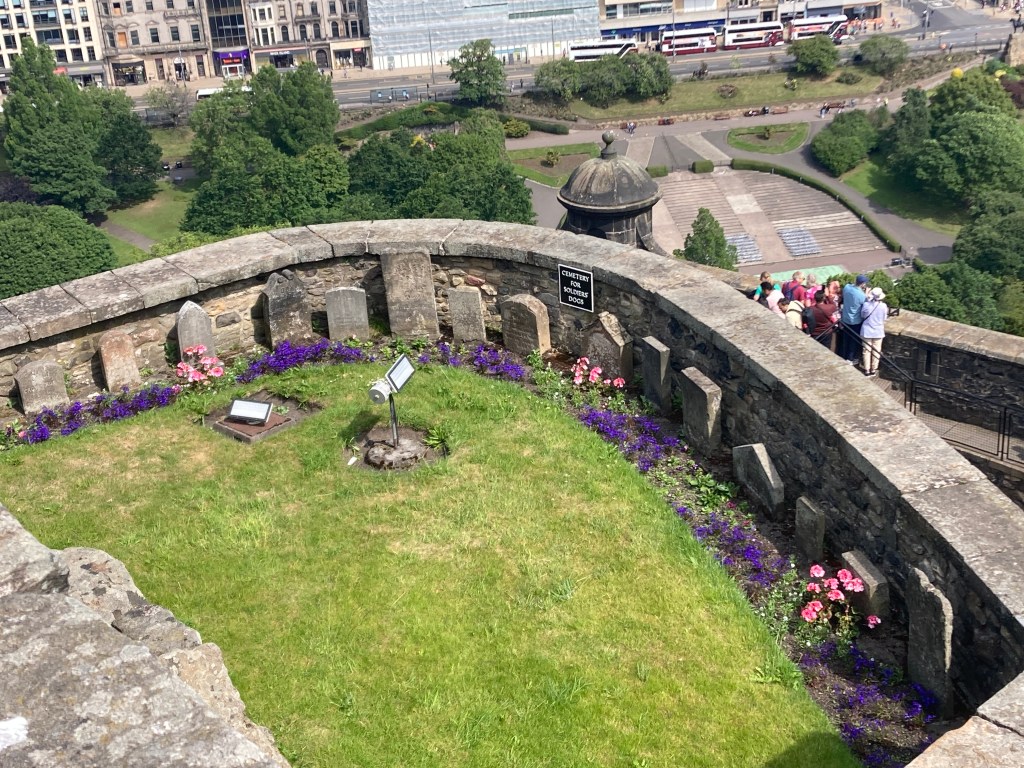
The Soldier’s Dogs Cemetery within the walls of Edinburgh Castle

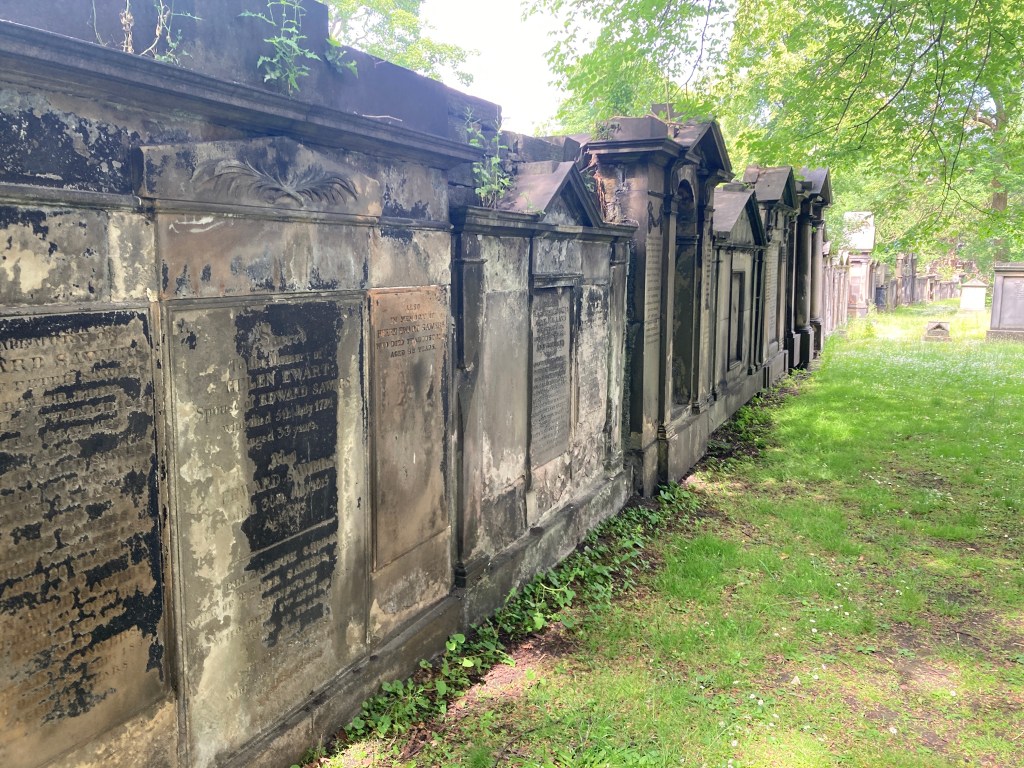
Below are a couple of pictures from St. Cuthbert’s Churchyard. They are just an example of what can be seen on foot in both the Old and the New Town. There is no shortage of monuments, architecture, and statues. Many of the streets are cobblestone, wear appropriate shoes. But be sure to walk the city.

The Royal Botanic Gardens are amazing. At least what I saw of them – my legs were starting to give out. On the top of the list the next time I’m in Edinburgh.

Big Bend National Park

It isn’t easy to get to. It is in Texas. But it is so amazing! Please go!

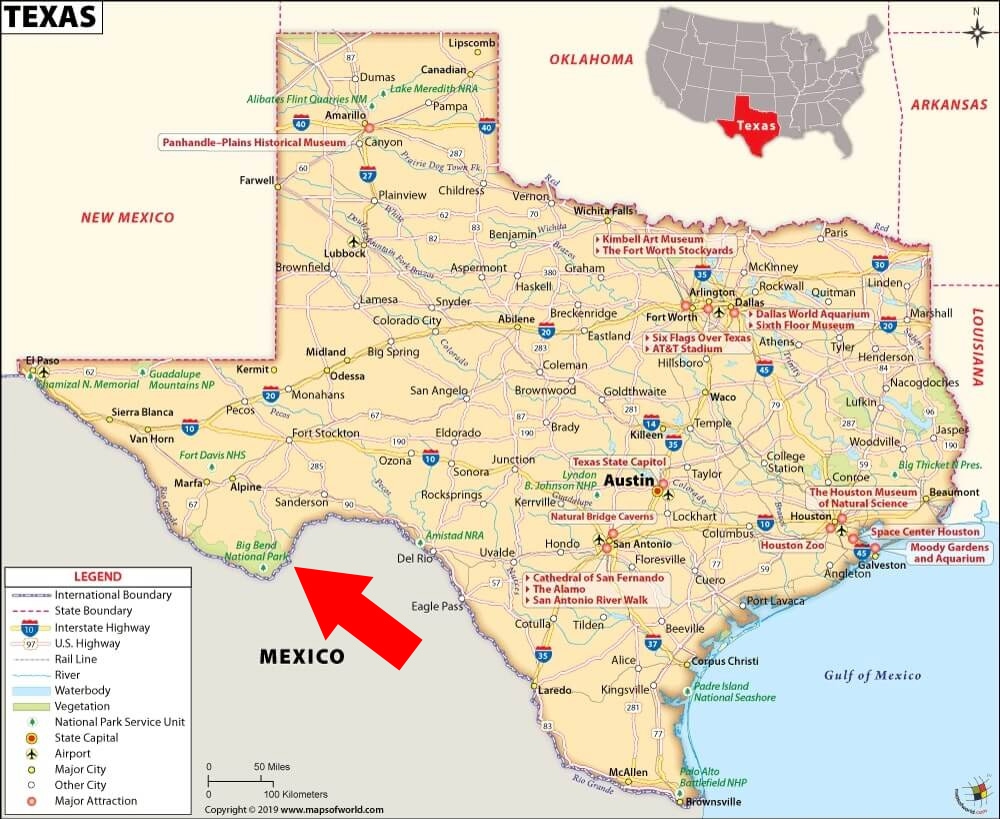
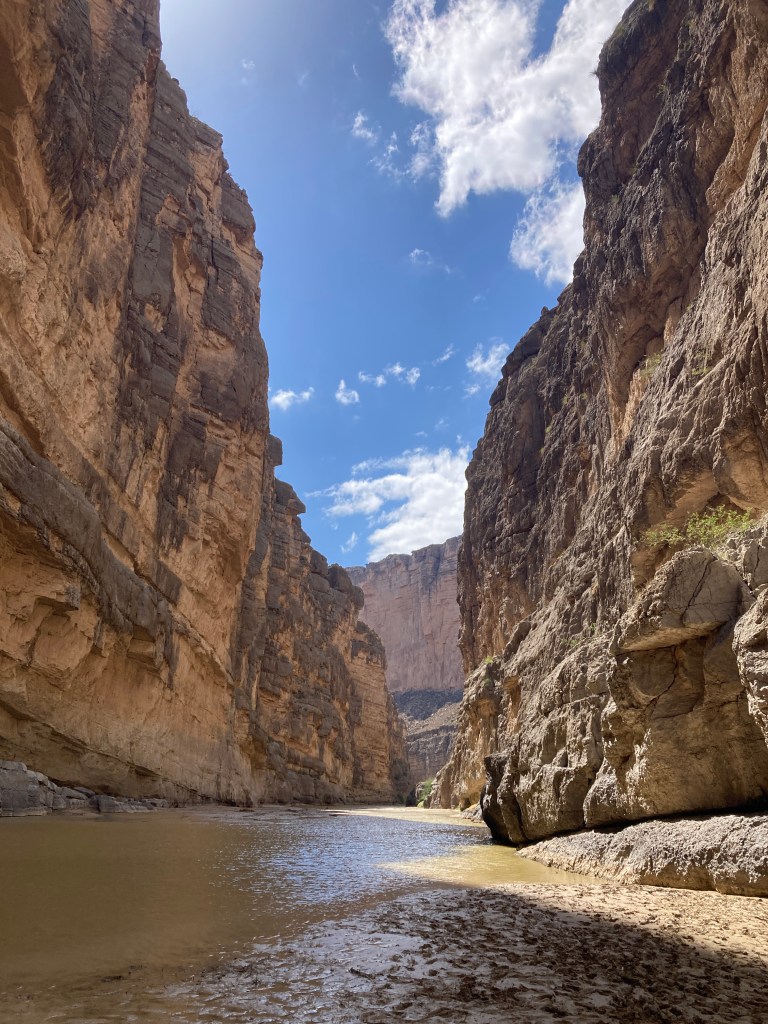
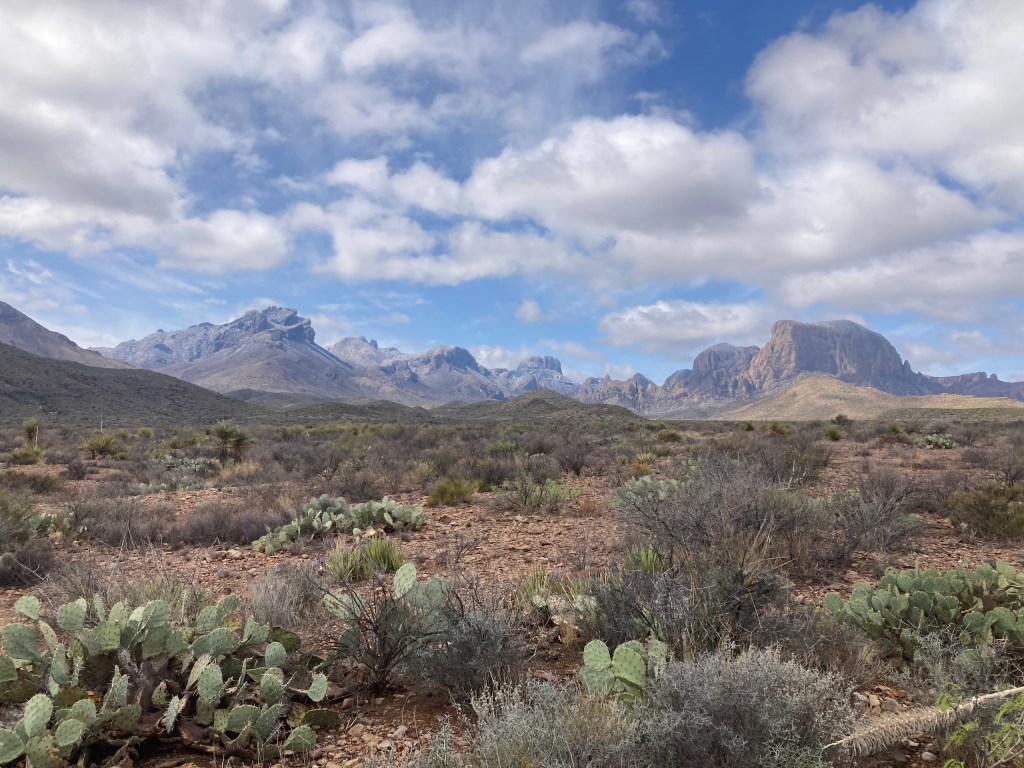
It doesn’t look that big on a map of Texas, but it is over 800,000 acres. There are three distinct ecologies in the park – river, mountains, and desert.

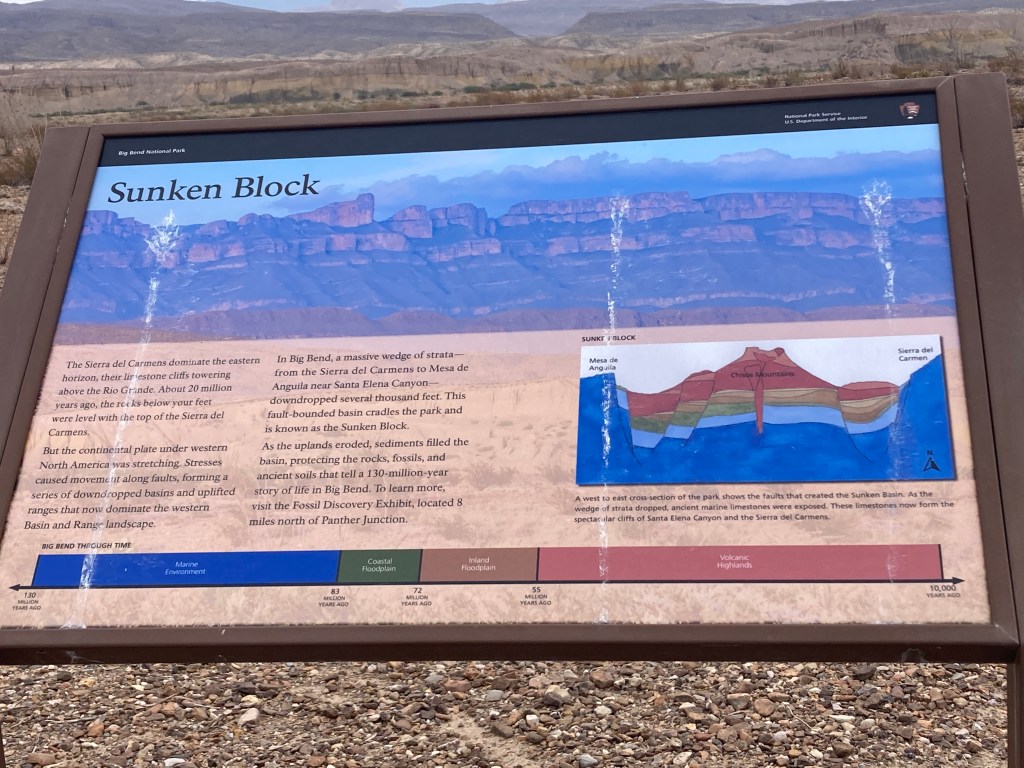
I’m really tempted to go off on the geology. But I’ve already done that for Newfoundland and don’t want to get a reputation. If you want geology, see https://everywhere-man.com/2023/06/06/geeky-as-i-wanna-be/

THE RIVER – The Rio Grande

The river is one of the three distinct ecosystems in the park. The Rio Grande forms the border between the US and Mexico and is also the southern border of the park. Bordering the river is one of the two places in the park you are going to see much green. But only close to the river and then it is generally muted.

THE MOUNTAINS – Chisos Mountains

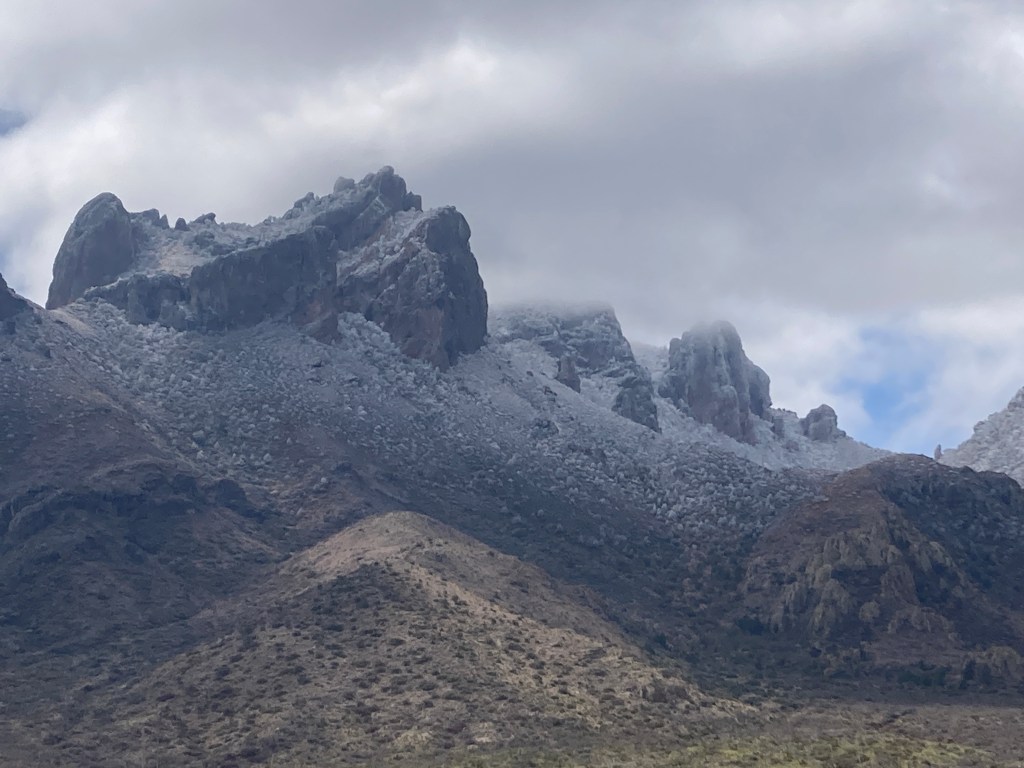
The other place you will see some green is in the Chisos Mountains. This is the second ecosystem of the park. A “sky island”, it supports a variety of plants and wildlife that wouldn’t otherwise be found in a desert. What looks like frost or snow in the picture below on the right is really a gray tree. Maybe juniper?

THE DESERT – Chihuahuan Desert

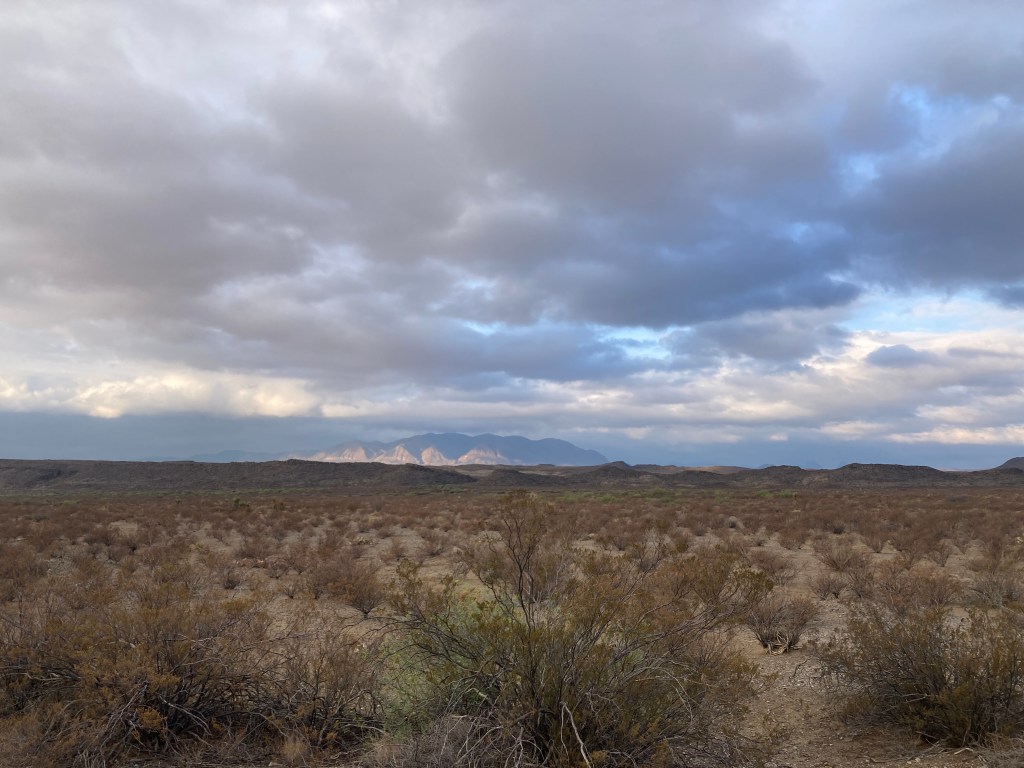
Much of Big Bend is the northern tip of the Chihuahuan dessert, the third distinct ecosystem in the park. Vast and intimidating.

The sotol plant is found throughout Big Bend. Though it sure looks like a cactus, sotol is a plant in the asparagus family. It is also used to make an alcohol. More on that in the next post.

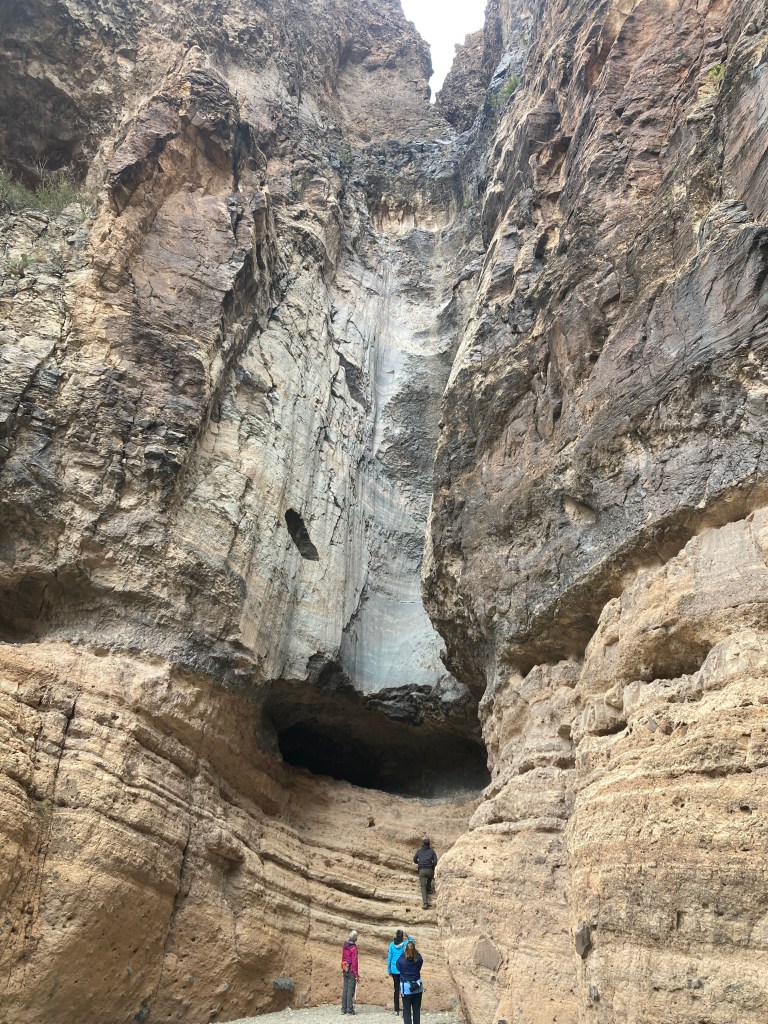
There is very little water in Big Bend. Except when it rains. This is a “pour off” from the top of a mesa in the park. When it does rain, it tends to be a deluge, and all of the water landing on the top of the mesa flows to a lower point. This downspout was formed over time by these events. The Park Service is very clear that one should not be in this area if there is any chance of rain at all…

Lower Burro Mesa Pour Off

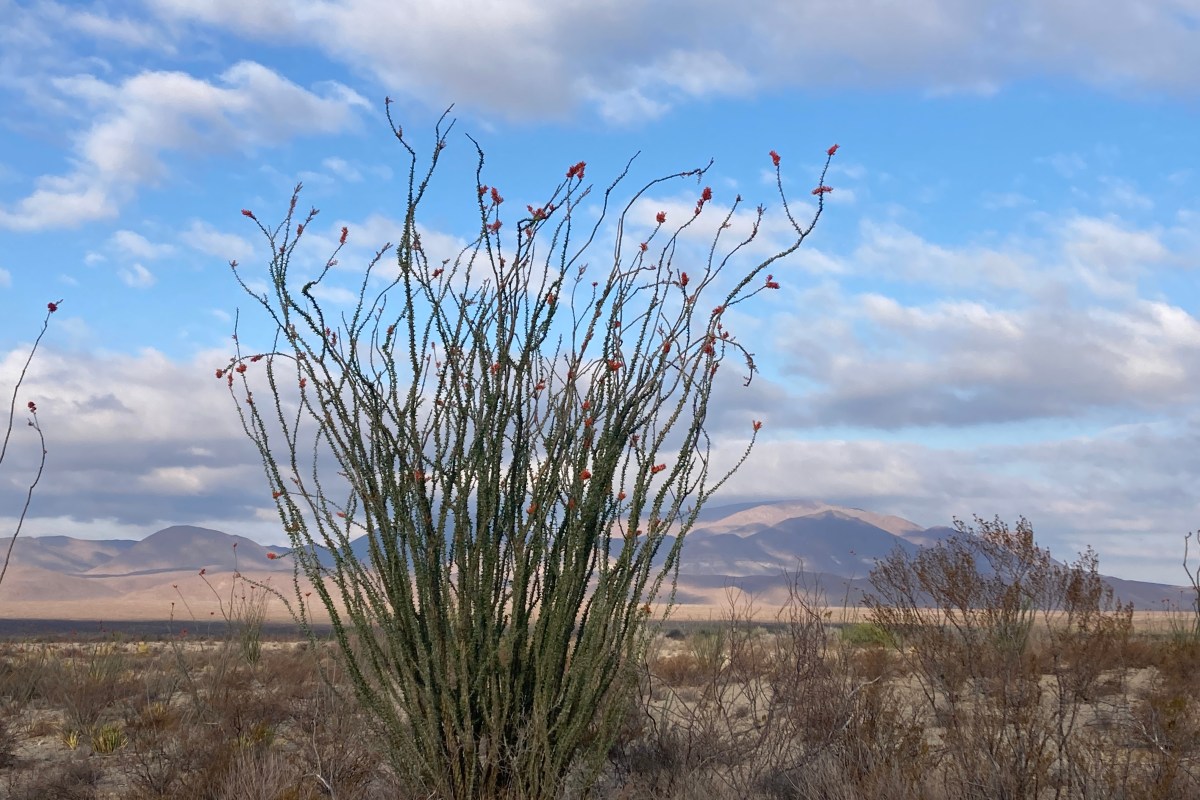
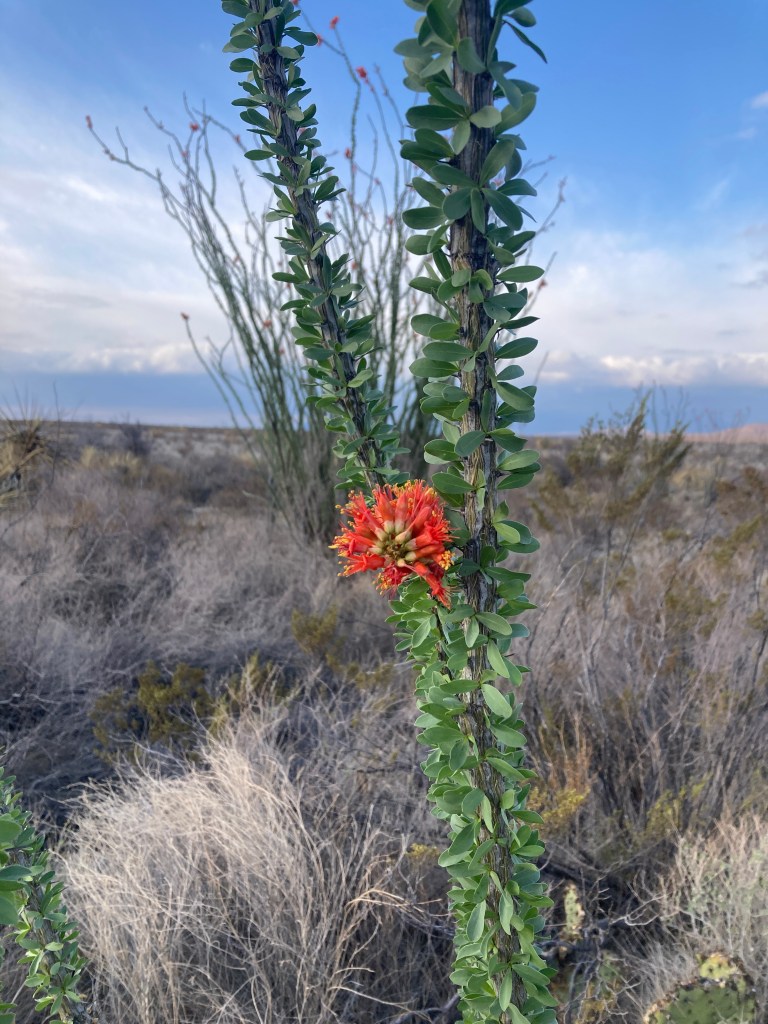
The picture at the top, and the one to the left is ocotillo. I was fortunate to have it in bloom while I was in the park. It has become a favorite of mine.